- Catalogue of Making
- Shape of Noise
INTRODUCTION
The Essence of Noise
The essence of noise lies in its complexity. Whether it is white noise, where all frequencies are evenly mixed, or urban noise, where tens of thousands of sounds intertwine into a massive cluster, our brains struggle to process this complexity. As a result, we classify it as "unpleasant" and filter it out.
In high-density cities like Singapore, noise acts like an invisible building material that occupies space. Just as bricks and glass construct buildings, noise densely fills the gaps of the urban environment. Yet, because it is invisible, we often forget its presence and mass.
The Shape of Noise project begins precisely at this point. "What if we could give form to this chaos?" This project transforms intangible vibrations dispersed in the air into tangible sculptures through gestures. We do not merely listen to noise; we touch, manipulate, and physically experience the energy embedded within it.
RESEARCH
Site-Specific Noise Analysis
13 distinctive locations across Singapore were analyzed to capture the unique sonic characteristics of each area. This field research documents how noise shapes the identity of urban spaces through its texture, frequency, and dynamics.
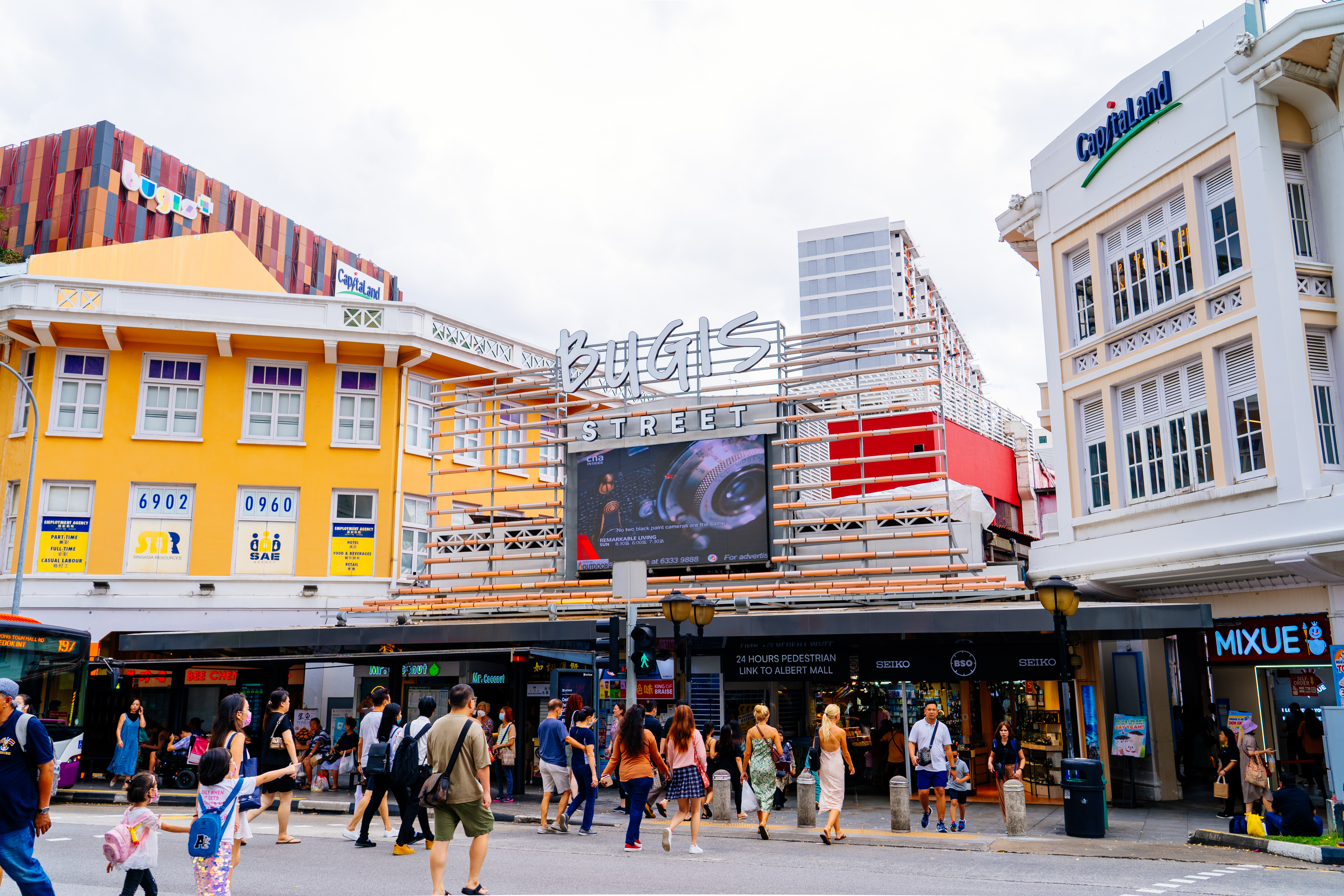
1. Bugis
Noise Source: A chaotic mixture of sounds from the shopping mall (Bugis Junction) and the traditional market (Bugis Street). Includes busking performances, traffic light signals, and high-pitched chatter from the young crowd.
Sonic Characteristics:
High Pitch & Pop: Due to the youthful demographic, the overall tone (key) of the sound is high and has a popping, energetic feel.
Digital + Analog Mix: A blend of cold, mechanical noise from the mall and boisterous, human voices from the open-air market.
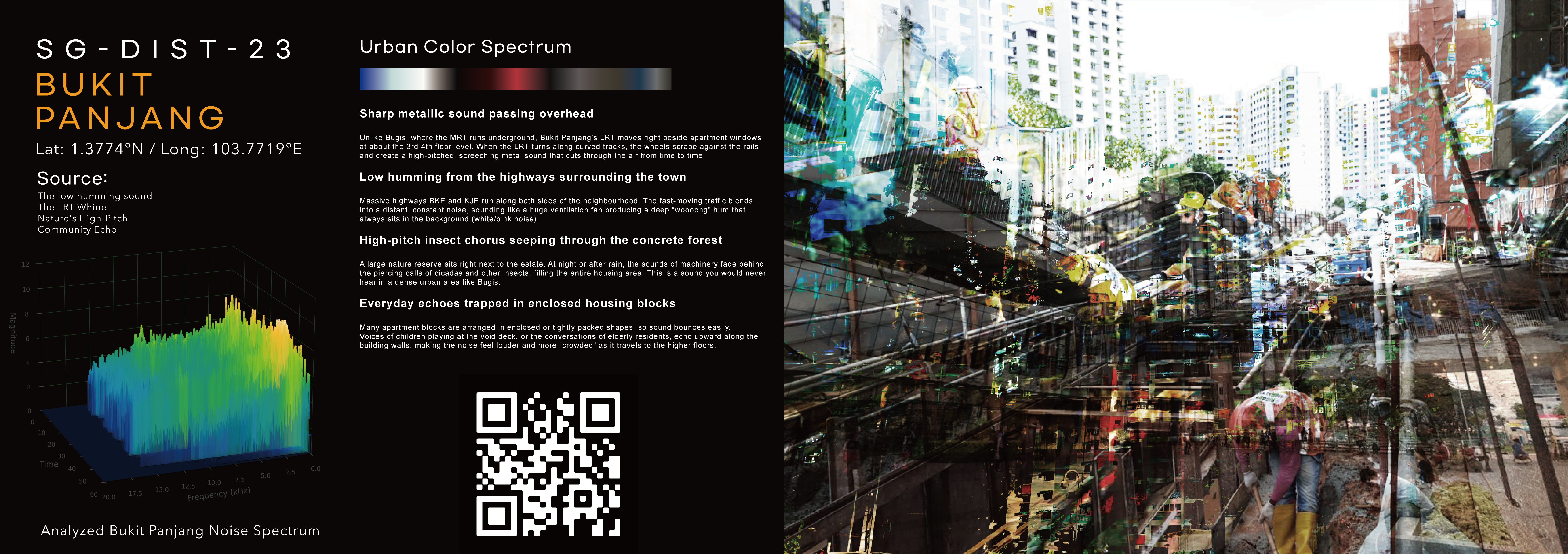
2. Bukit Panjang
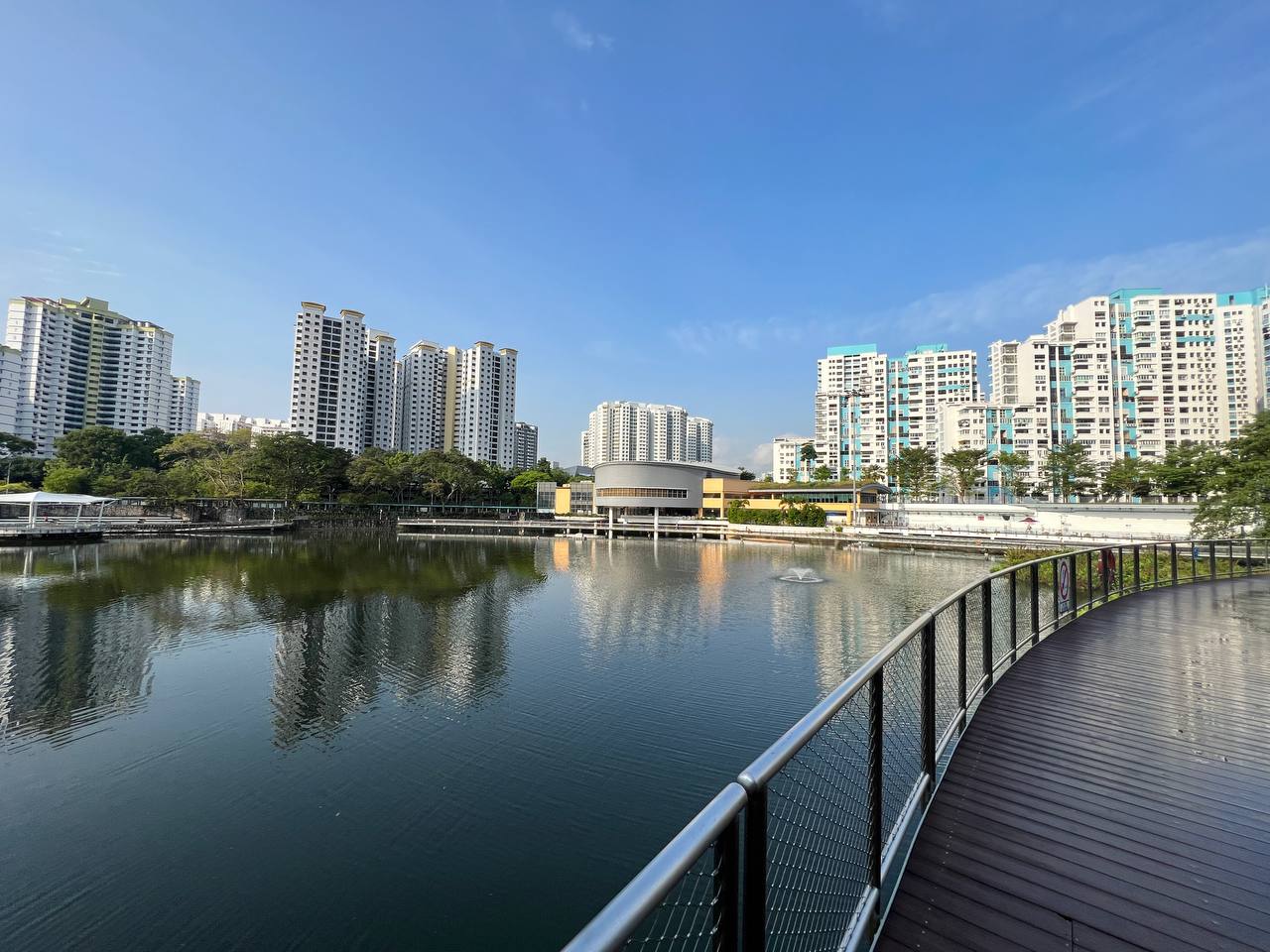
Noise Source: The distinctive driving sounds of the passing LRT (Light Rail Transit), residential living noise from HDB estates, and vehicles moving on wet roads.
Sonic Characteristics:
Looping: Periodic and repetitive waveforms created by the scheduled passing of the LRT.
Dampened: Sounds spread in a muffled or dampened manner as they bounce between buildings in the dense residential area.
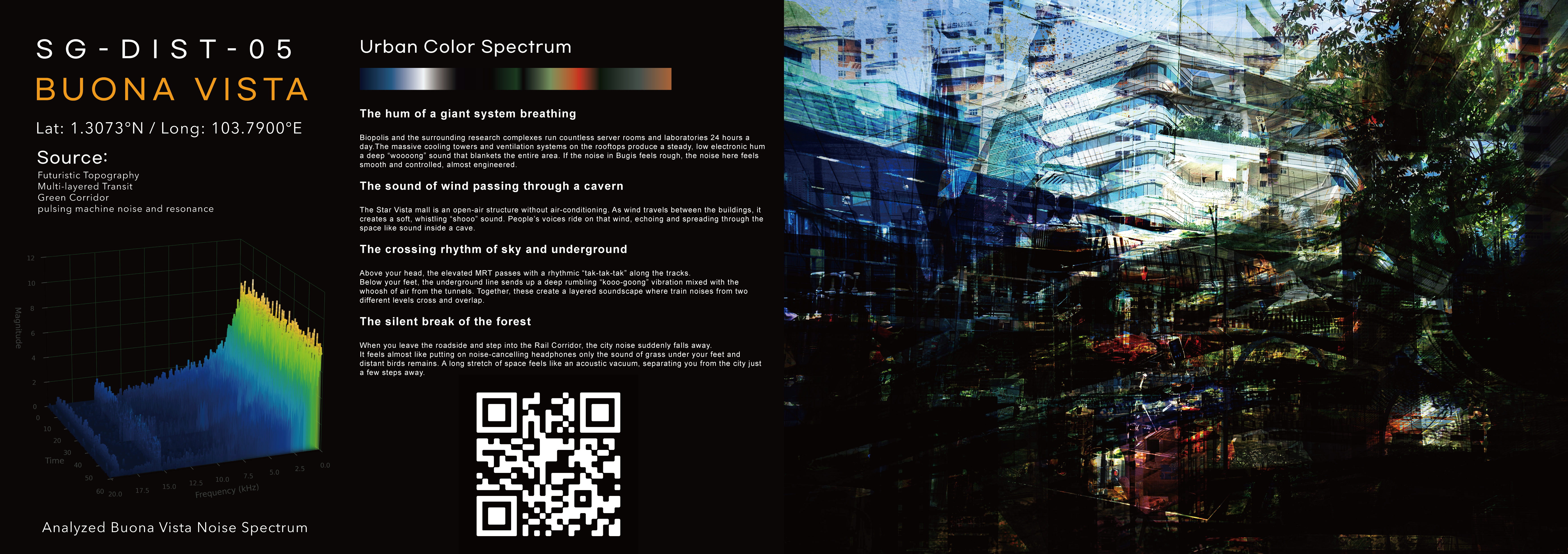
3. Buona Vista
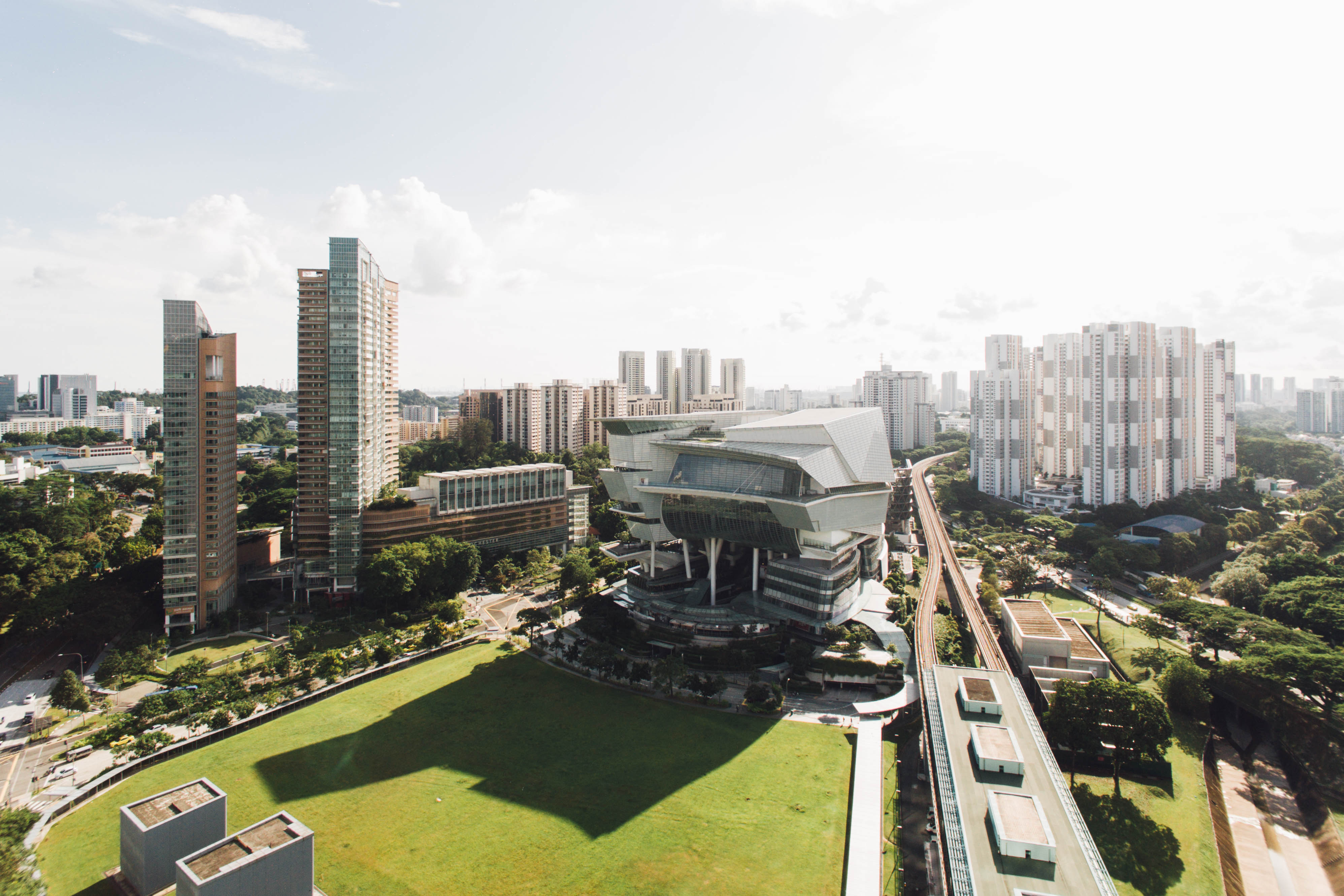
Noise Source: Escalator sounds from the massive Interchange, dry wind sounds from the Biopolis/Fusionopolis building clusters, and the noise of students moving in groups.
Sonic Characteristics:
Flowing: Continuous footsteps and movement sounds (White Noise) flowing along the long transfer corridors.
Airy: Wind sounds frequently mix in due to the open station structure and the spaces between high-rise buildings.
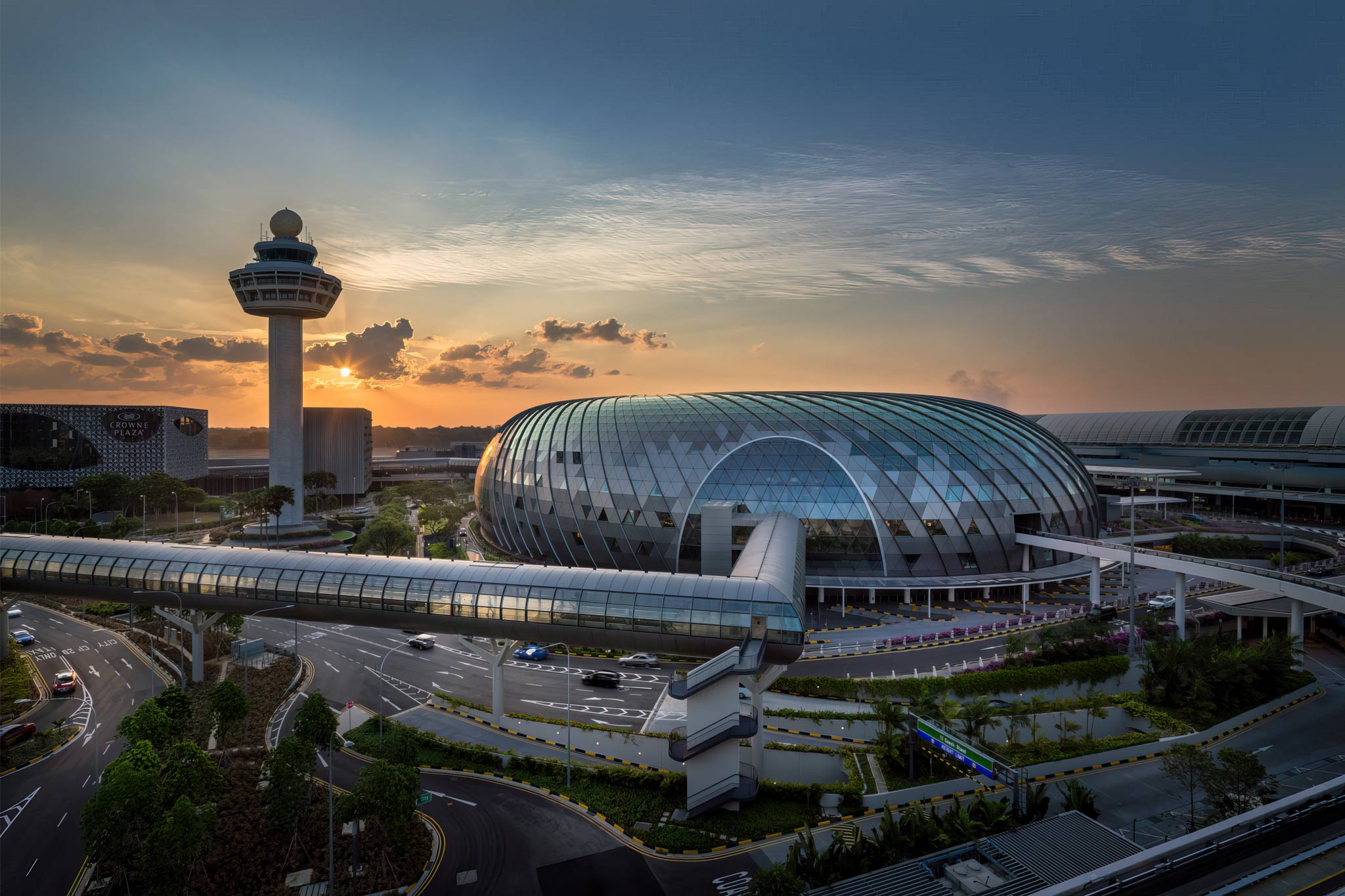
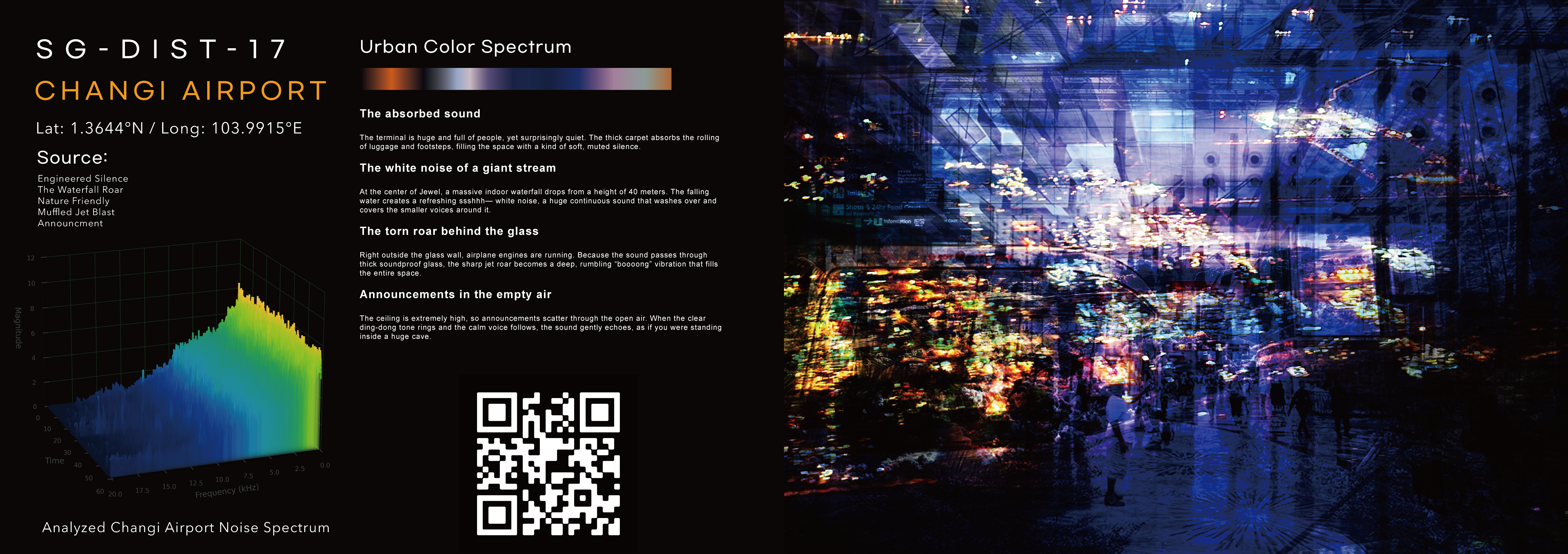
4. Changi Airport
Noise Source: The roar of jet engines (external), soft indoor announcements, the rolling of luggage wheels, and the hum of travelators.
Sonic Characteristics:
Extreme Dynamics: A high contrast between the perfect silence of carpeted interiors and the extreme noise levels during take-offs and landings.
Surround: Sounds resonate softly throughout the space due to the massive dome-shaped architecture (Reverb).
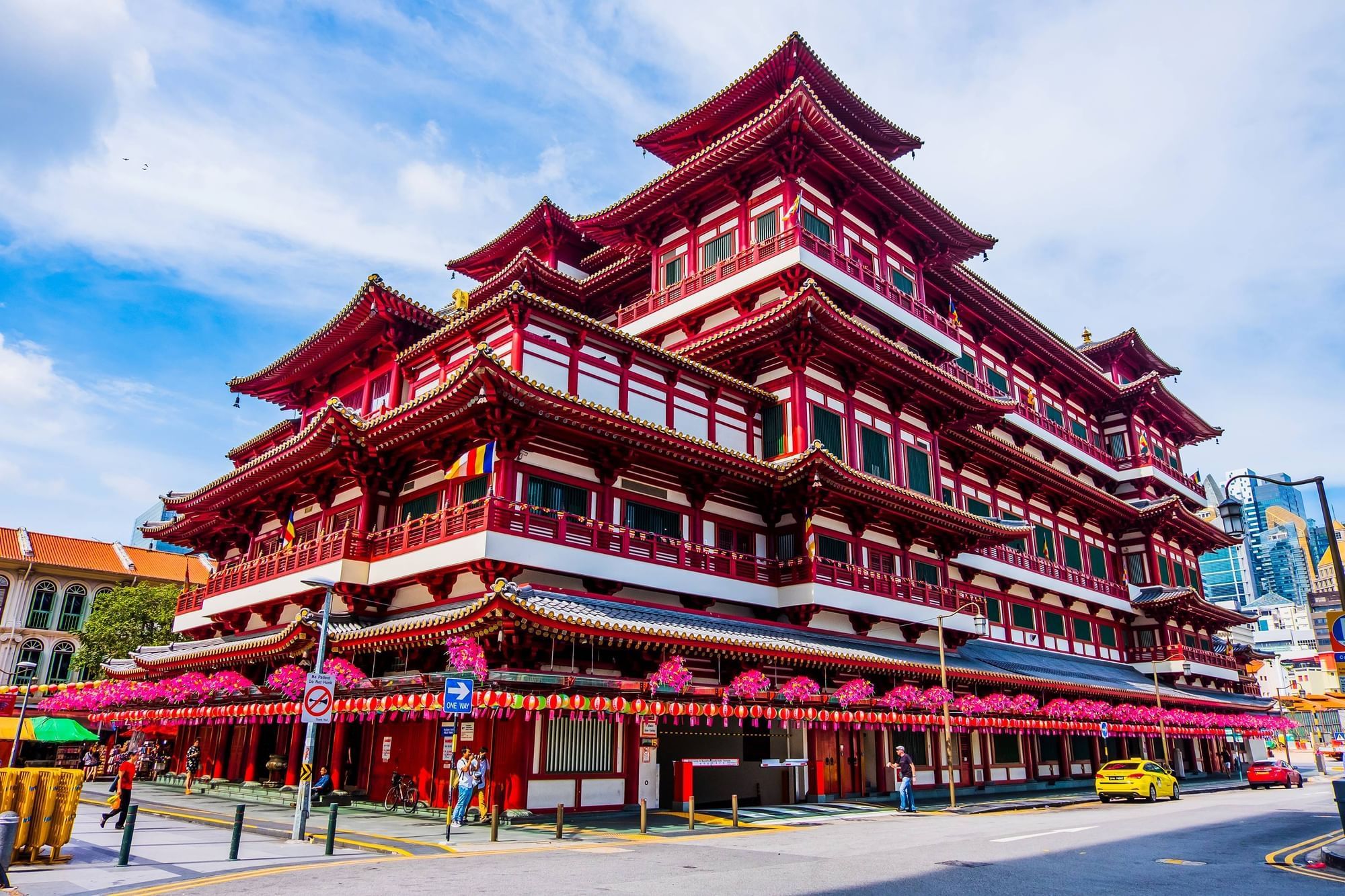
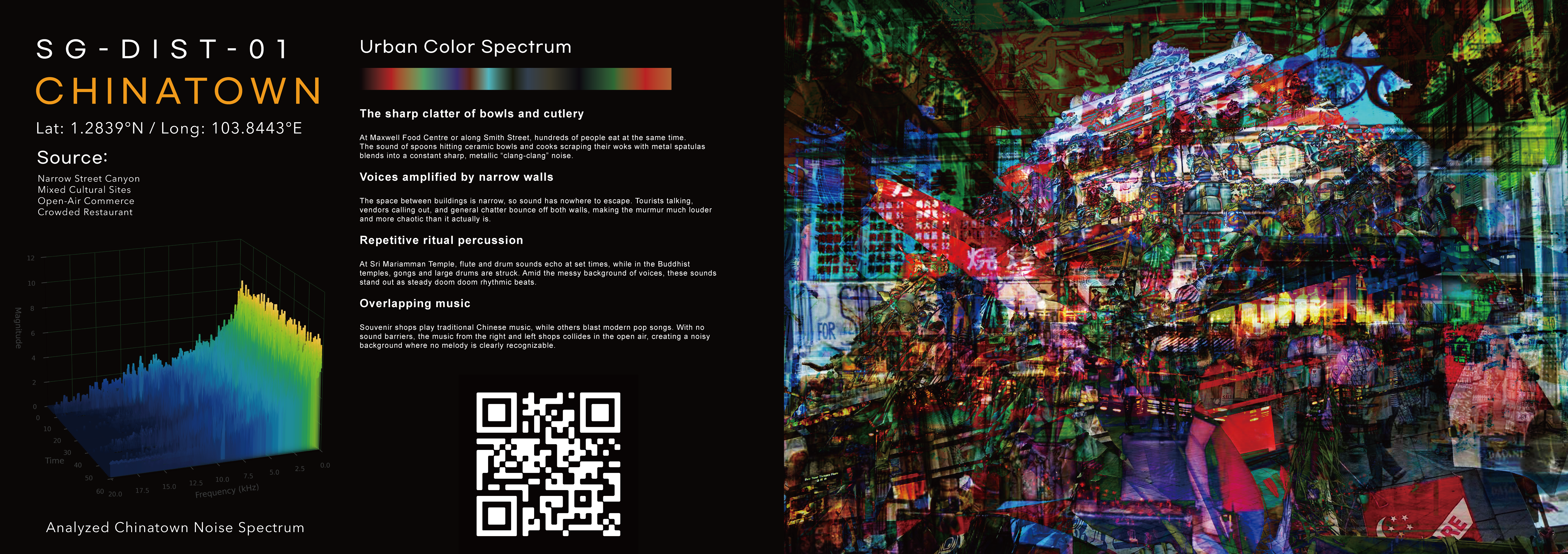
5. Chinatown
Noise Source: Hawkers soliciting customers, temple bells and wooden fish percussion, the clattering of cutlery in dining areas, and the buzz of tourists.
Sonic Characteristics:
Raw & Rough: Unrefined, raw sounds created by humans and analog tools rather than machines.
Layered: A high auditory density with various types of sounds layered on top of each other within the narrow alleyways.
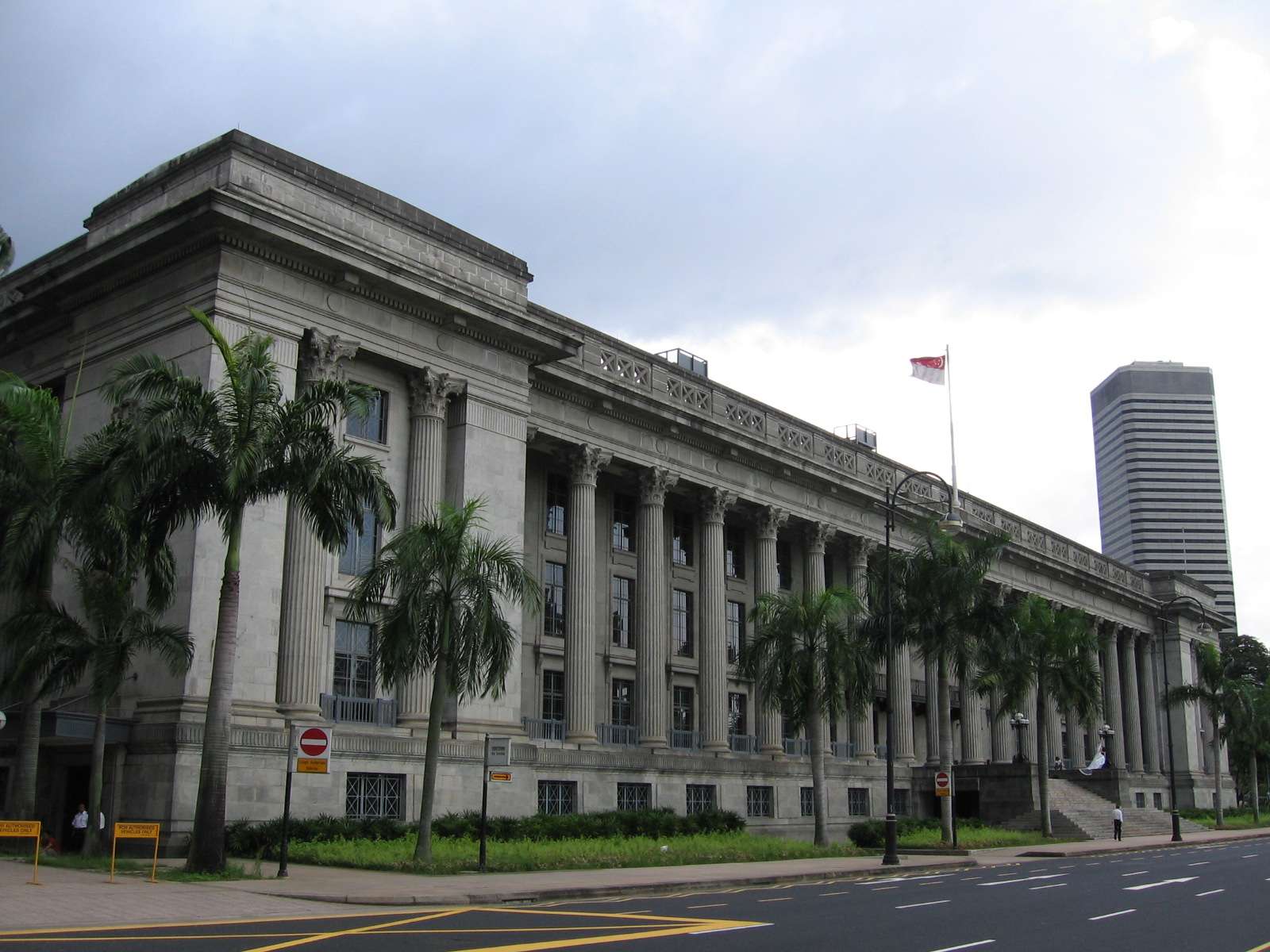
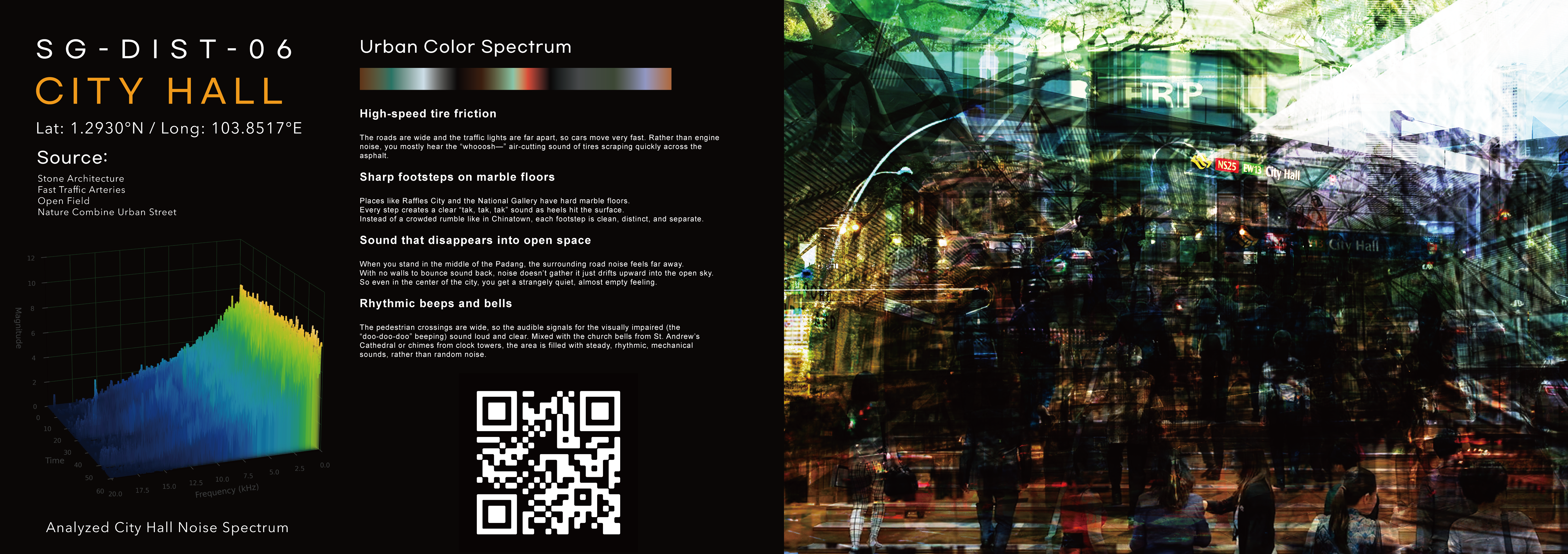
6. City Hall
Noise Source: Bus engine sounds on wide roads, traffic signals, the sound of air curtains at mall entrances, and intermittent church bells.
Sonic Characteristics:
Heavy & Wide: Due to the wide road width, sounds feel heavy and spread broadly across the area.
Structural: Sound is reflected firmly rather than absorbed, due to the surrounding massive stone and concrete buildings.
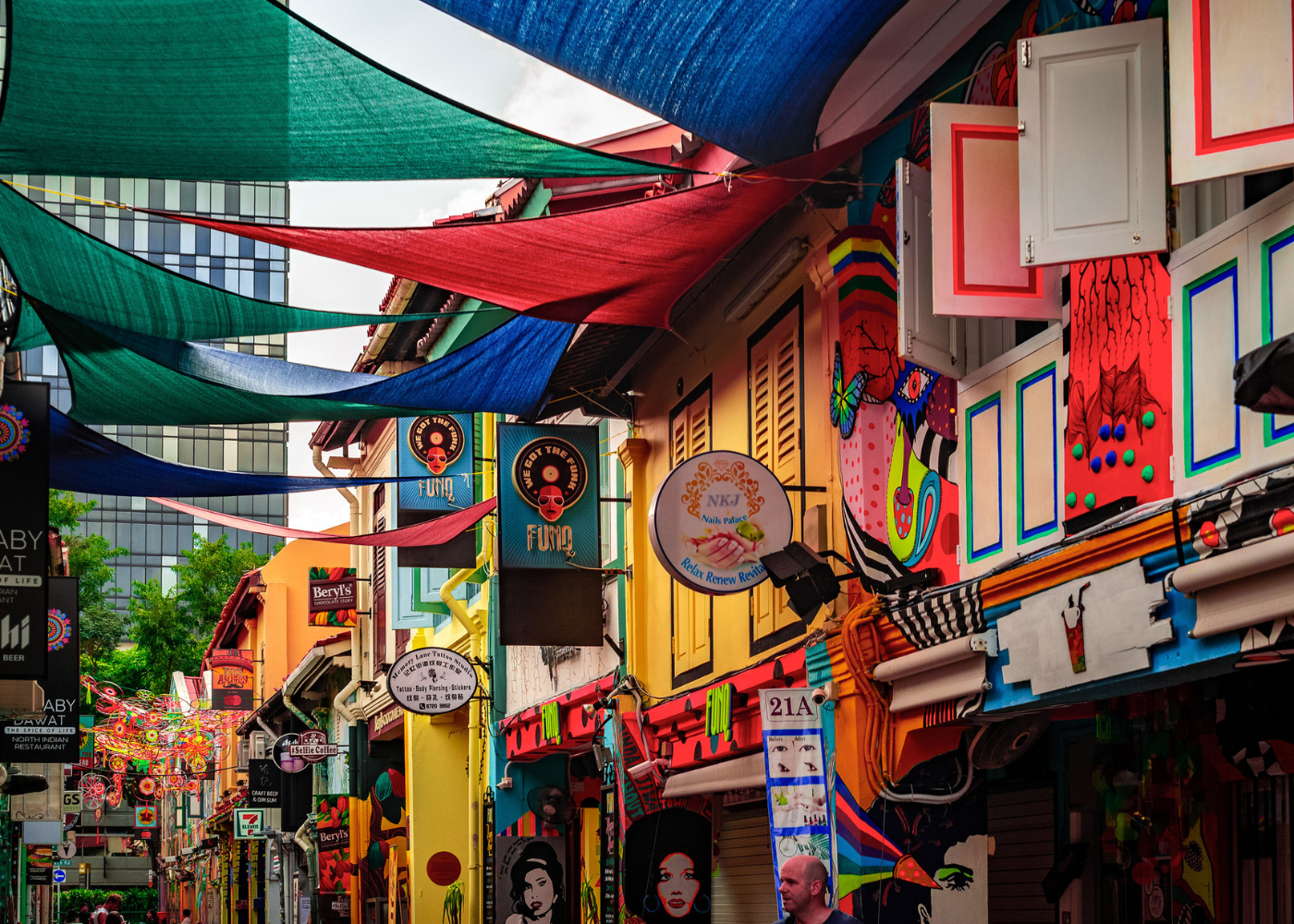
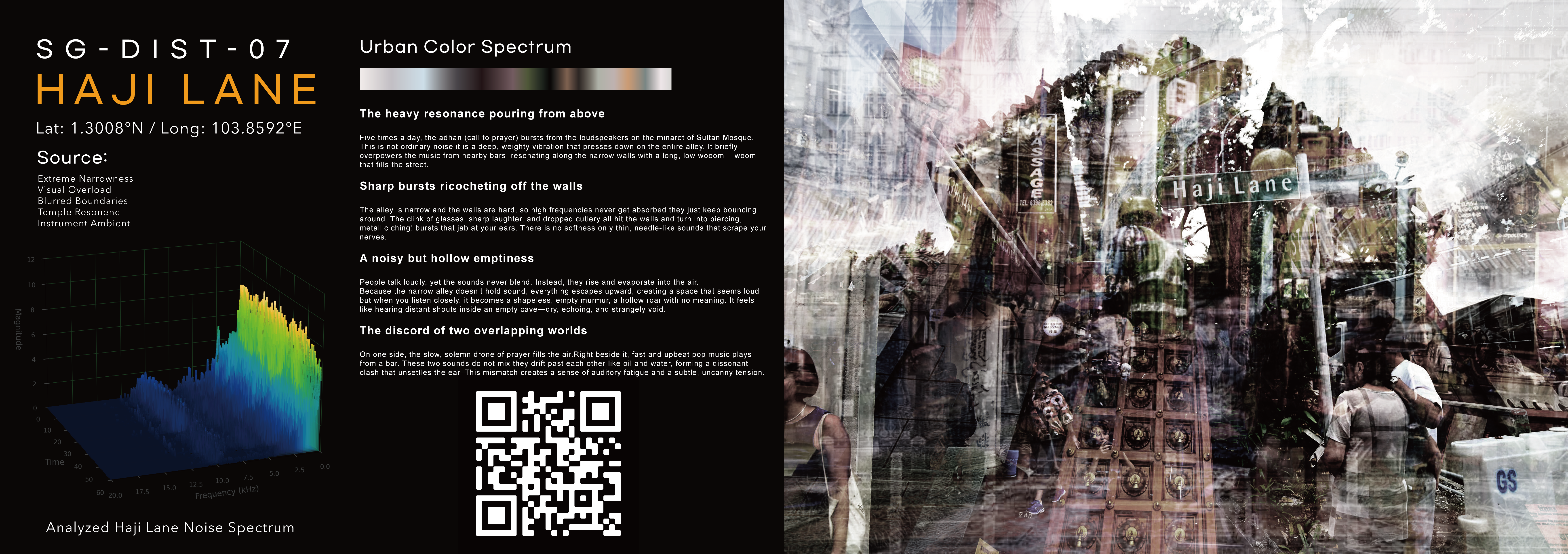
7. Haji Lane
Noise Source: Music spilling from pubs in narrow alleys, people's laughter, and the clicking of camera shutters in front of murals.
Sonic Characteristics:
Compressed: Sounds feel compressed and echo within the space as they cannot easily escape the narrow alleyways.
Vibrant: The bass from the music is strong, and the rhythmic qualities are distinct.
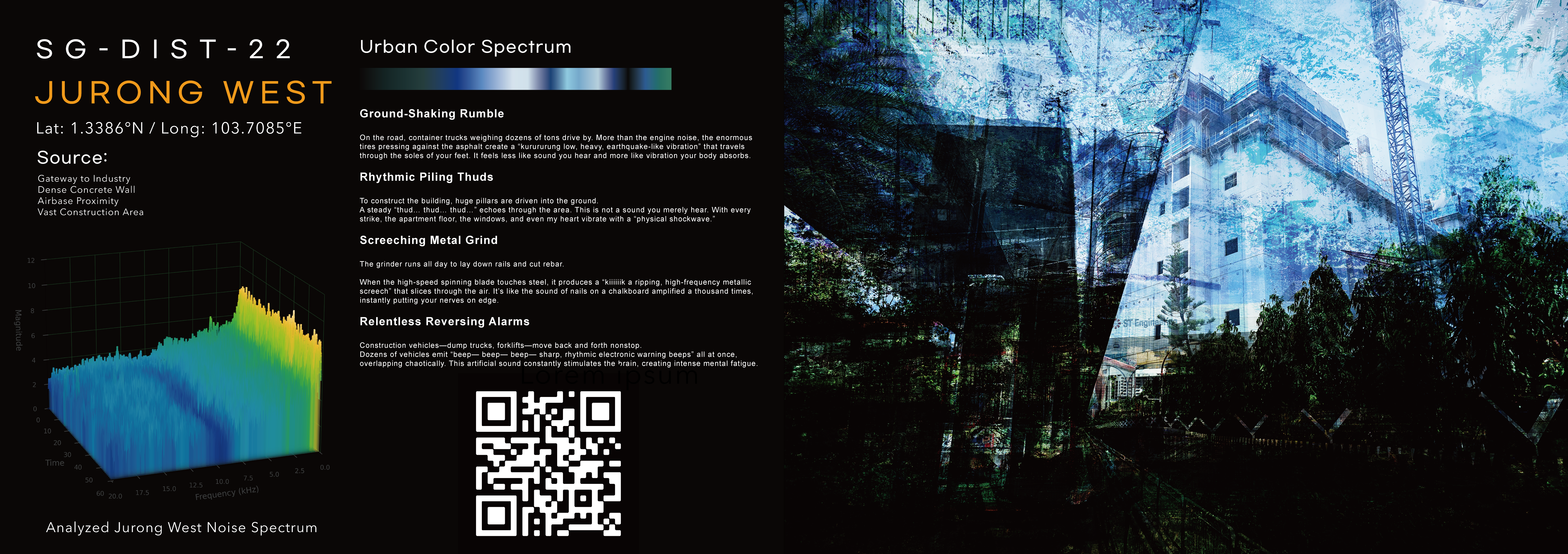
8. Jurong West
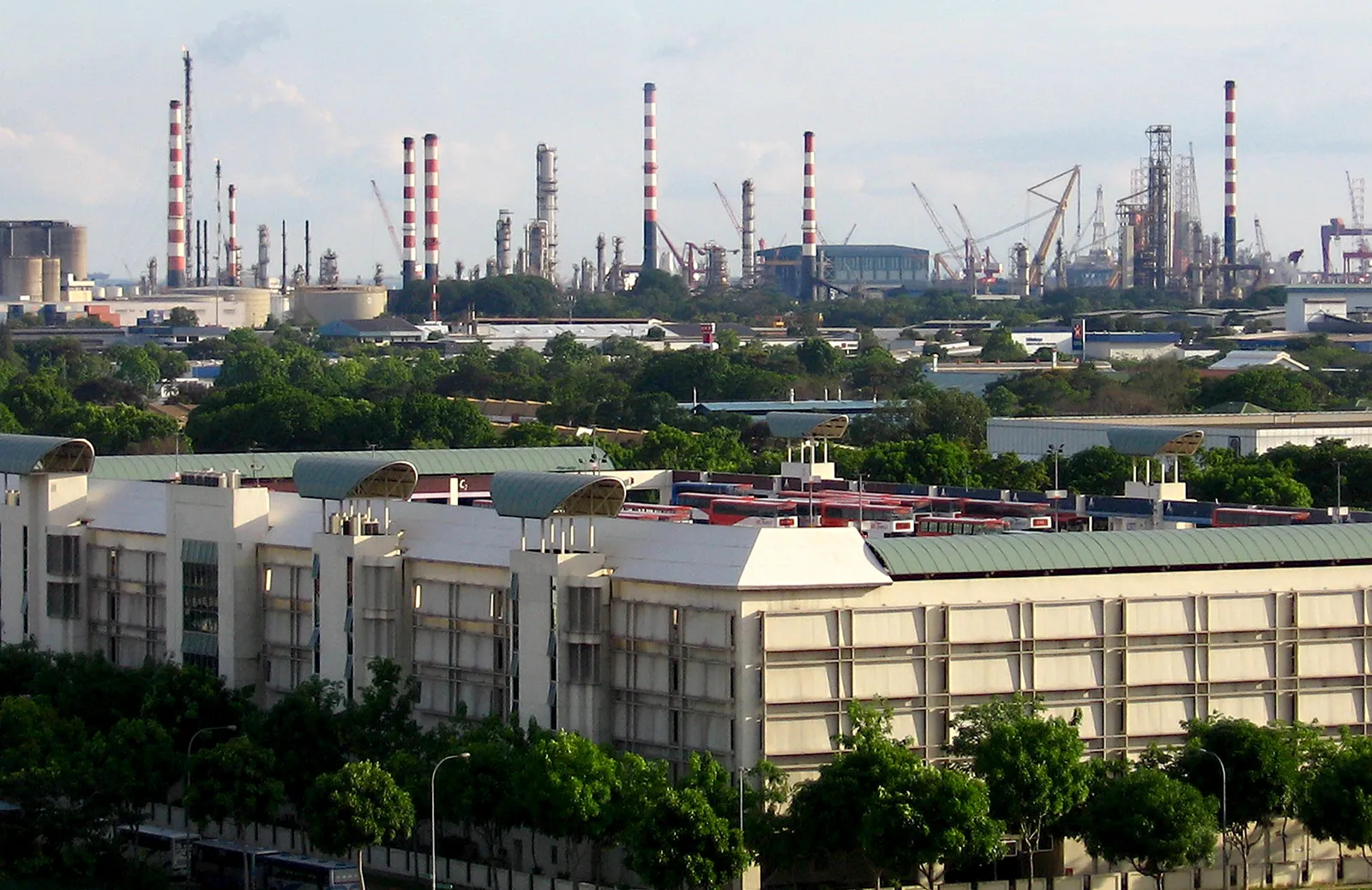
Noise Source: Machinery noise from industrial zones, the driving sounds of heavy trucks and container vehicles, and construction site noise.
Sonic Characteristics:
Low Frequency (Rumble): Continuous low-frequency vibrations that rumble across the ground.
Gritty: A rough, rugged texture mixed with metallic friction and mechanical sounds.
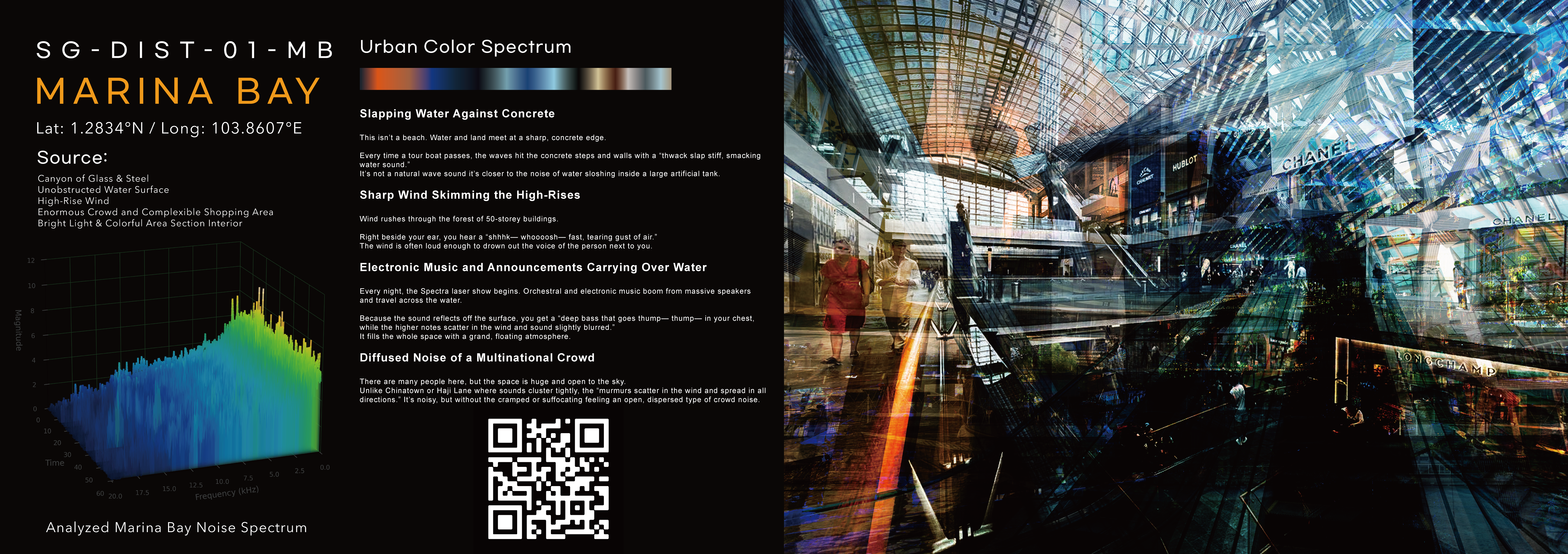
9. Marina Bay
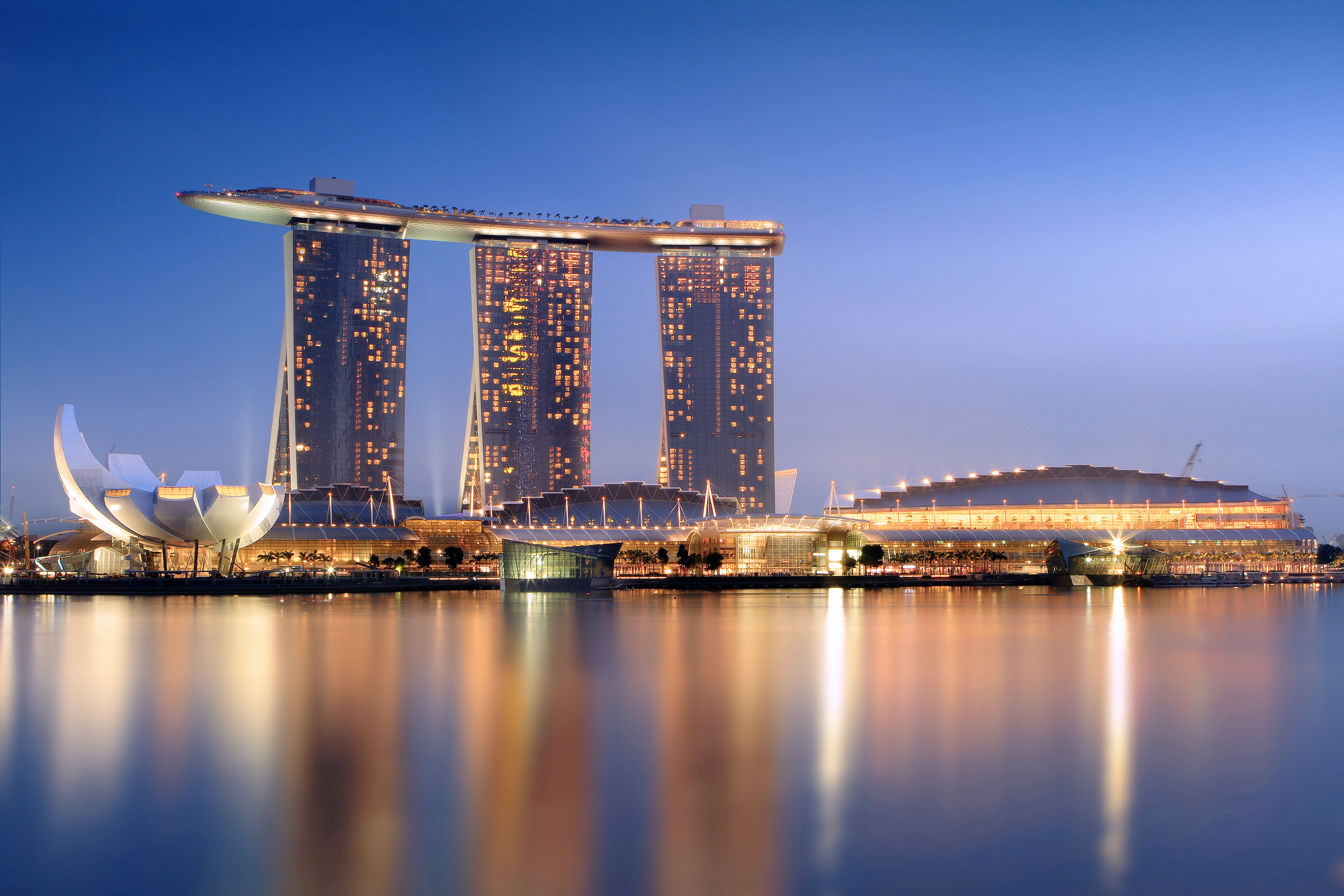
Noise Source: The sound of waves crashing against the promenade, strong winds, the distant drone of the city, and tourists' camera shutters.
Sonic Characteristics:
Expansive: A sense of openness and spaciousness as sound travels far over the water.
Reflective: A clear, cold auditory sensation as sound reflects off the water surface and the glass facades of buildings.
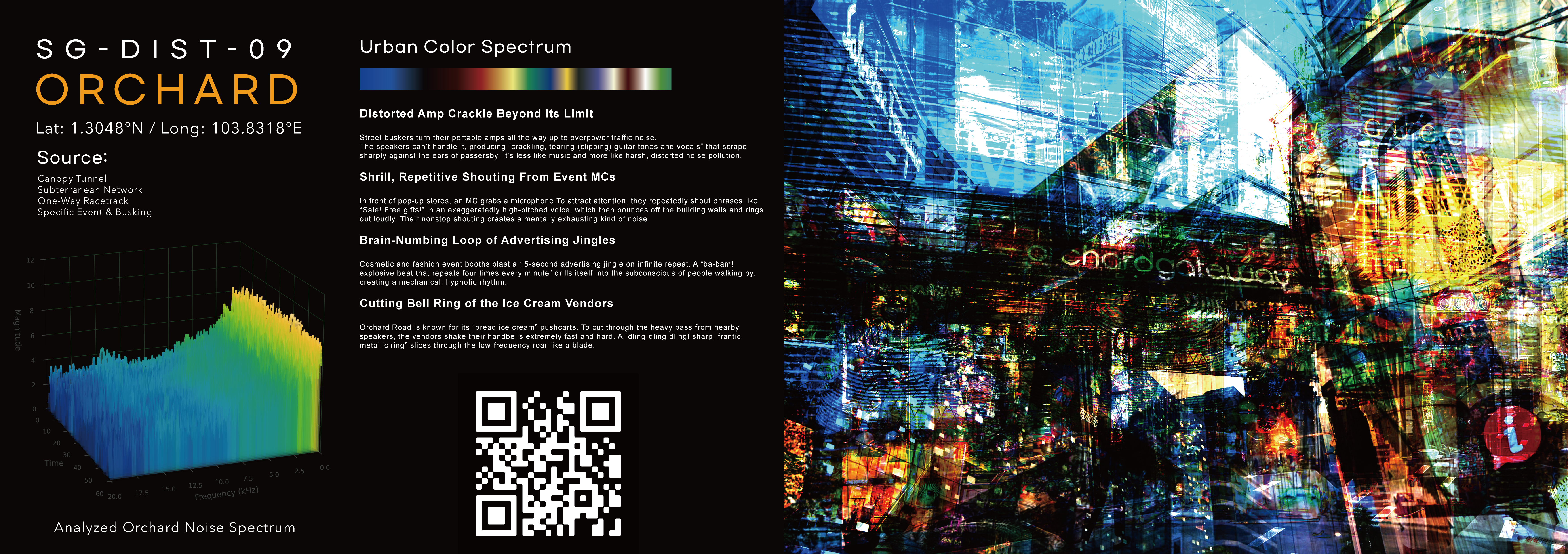
10. Orchard
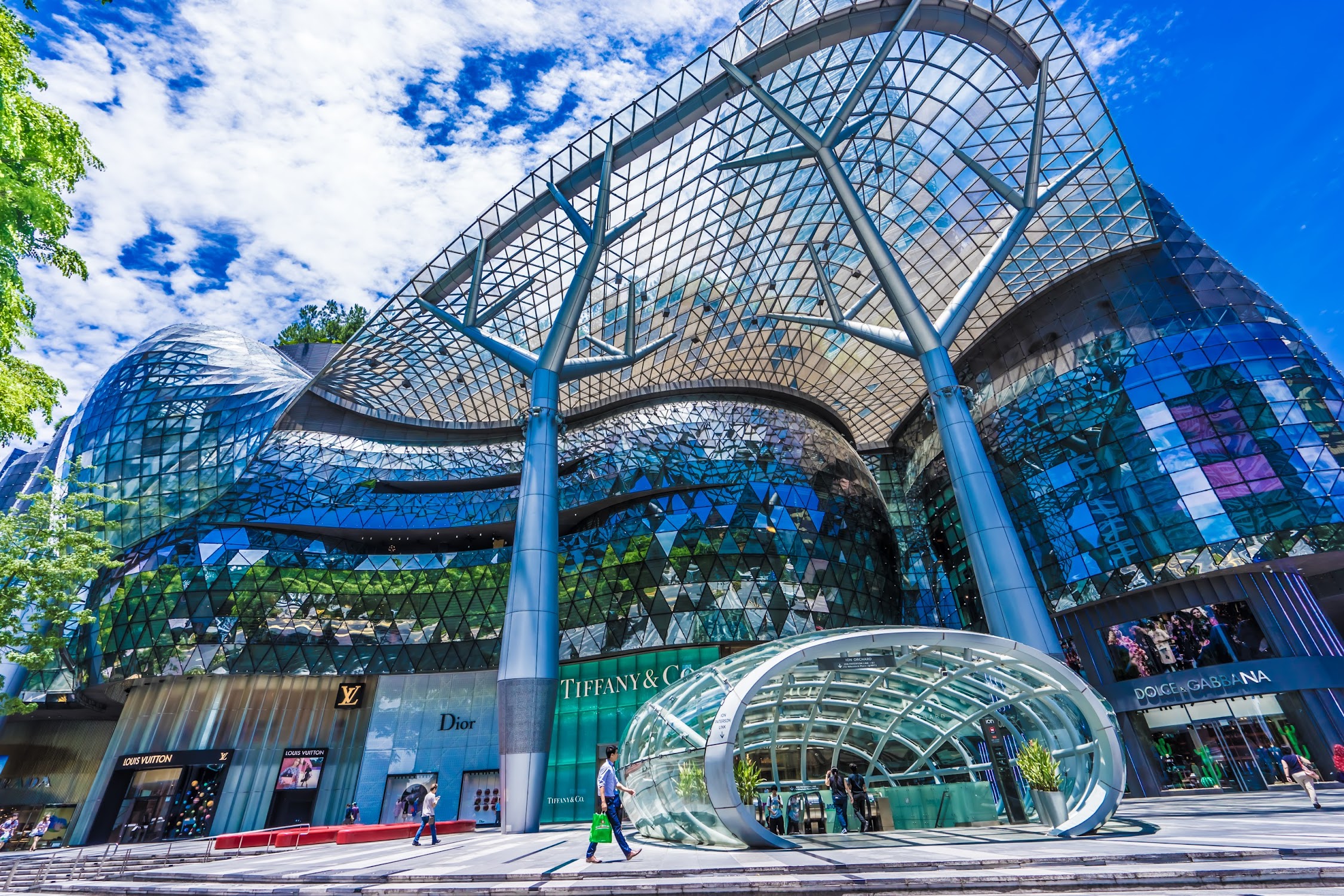
Noise Source: The "babble noise" of massive crowds, street busking performances, mall background music (BGM), and bird sounds at dusk.
Sonic Characteristics:
Continuous Flow: Noise continues constantly like a flowing river (Constant Stream).
Sparkling: A feeling of sound scattering sporadically from various directions, mirroring the glass and lighting of the malls.
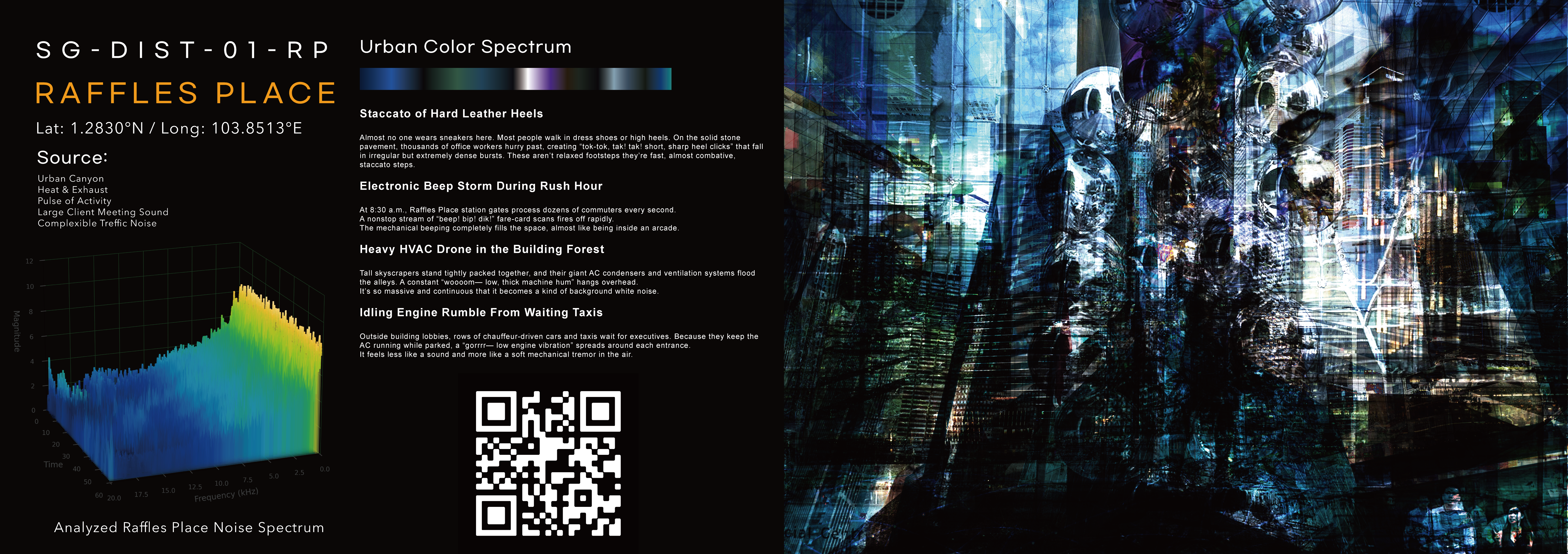
11. Raffles Place
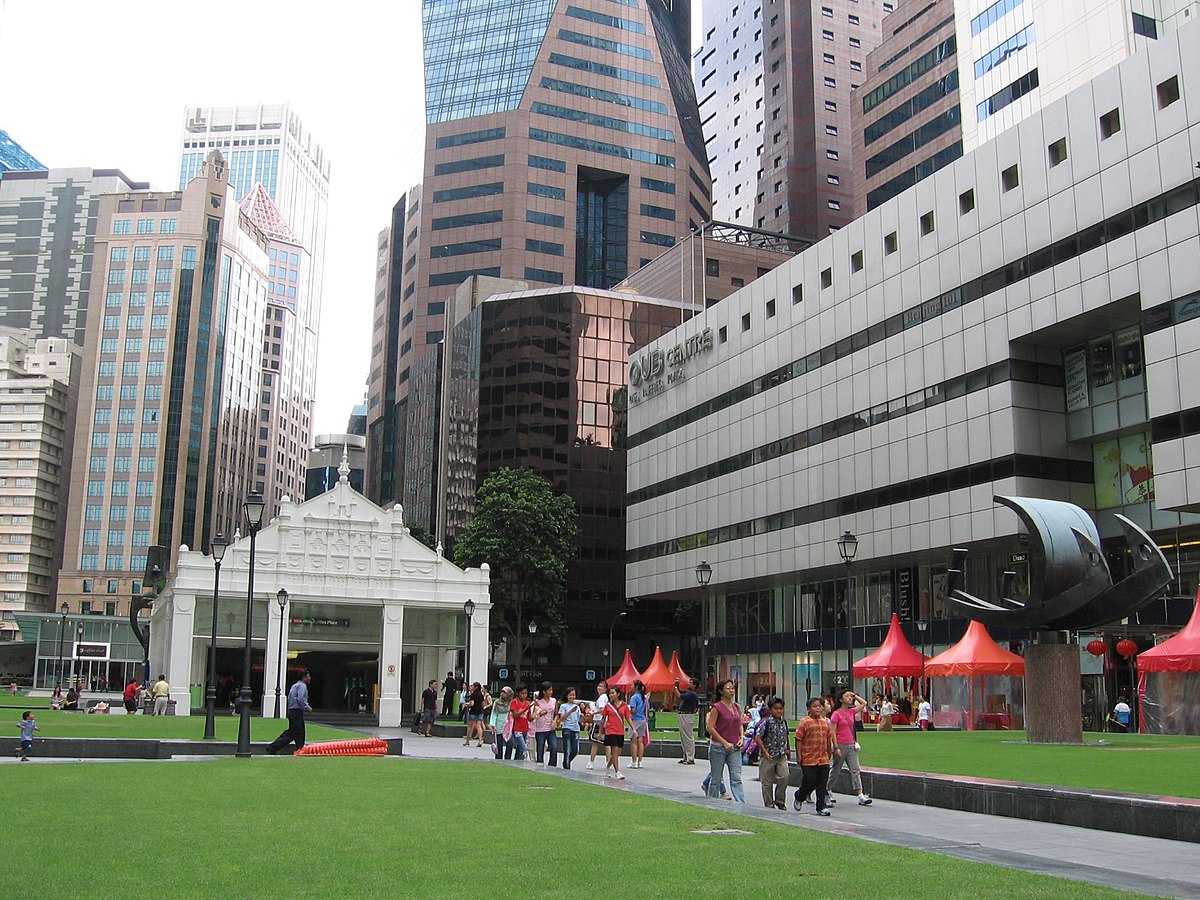
Noise Source: The whirring of HVAC systems in the skyscraper forest, the clicking of heels on pavement, and MRT gantry sounds. (Minimal speech).
Sonic Characteristics:
Mechanical Drone: A low-lying mechanical background sound (Drone) devoid of emotion.
Rhythmic: Precise and regular noise patterns that align with commuting hours and lunch breaks.
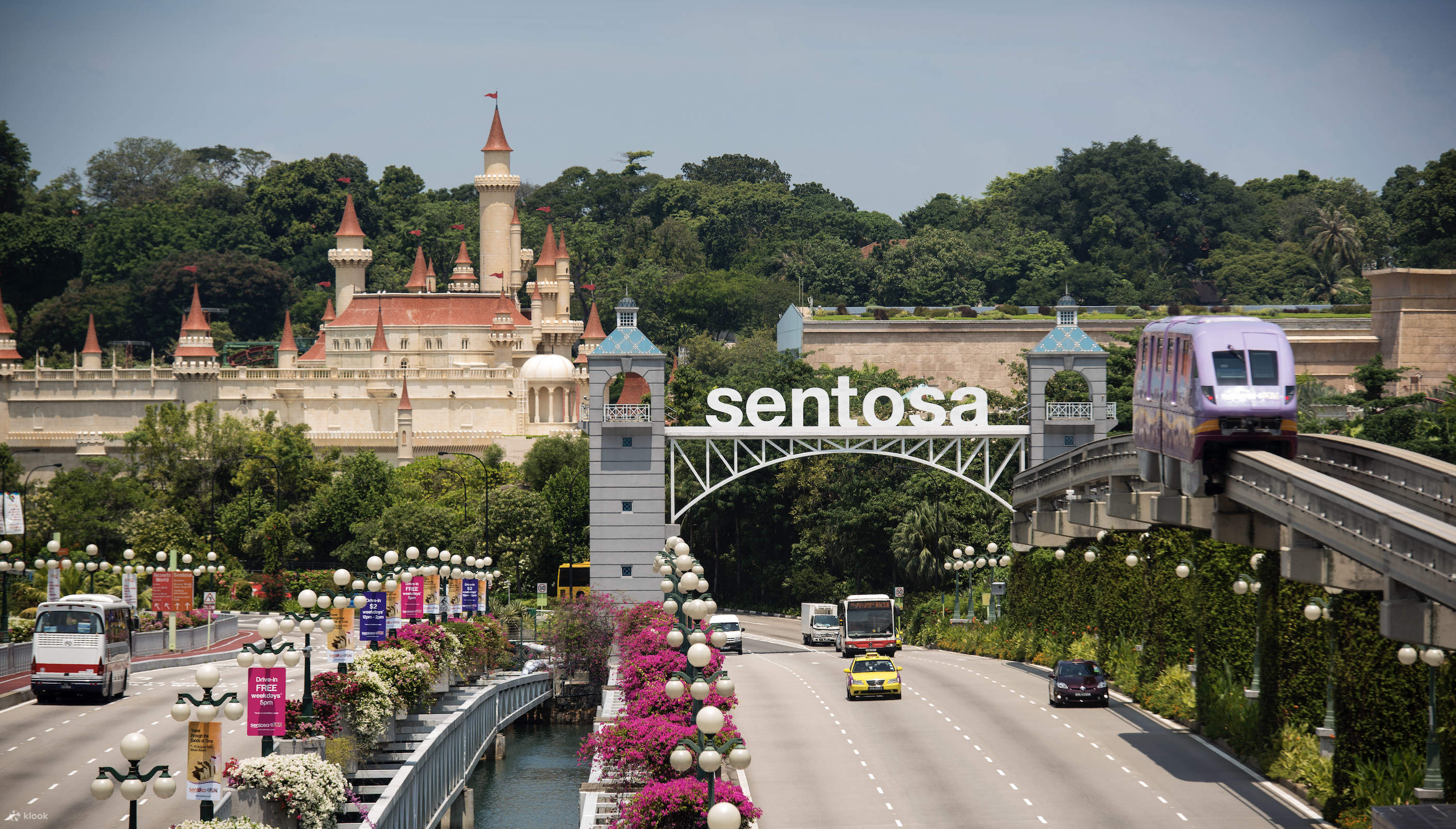
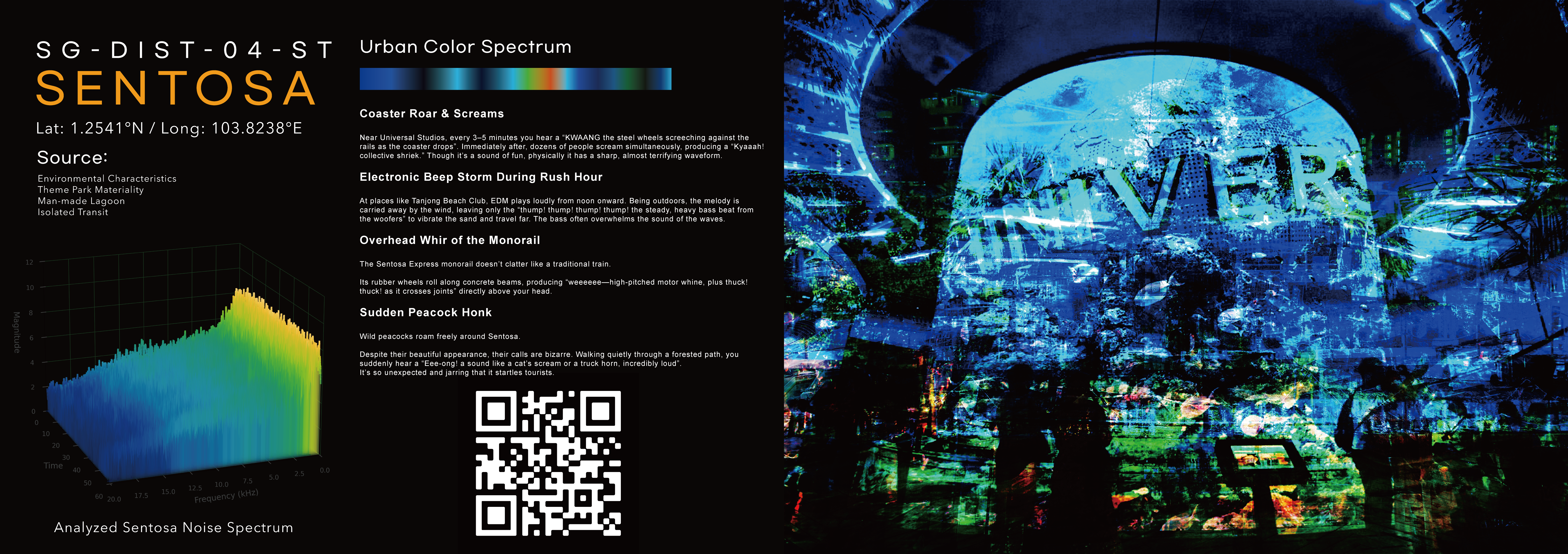
12. Sentosa
Noise Source: Artificial wave sounds, screams from Universal Studios, monorail operation sounds, and beach club music.
Sonic Characteristics:
Synthetic Nature: Sounds that resemble nature (waves/wind) but feel artificially arranged and curated.
Floating: A buoyant, detached atmosphere typical of a resort area, separated from reality.
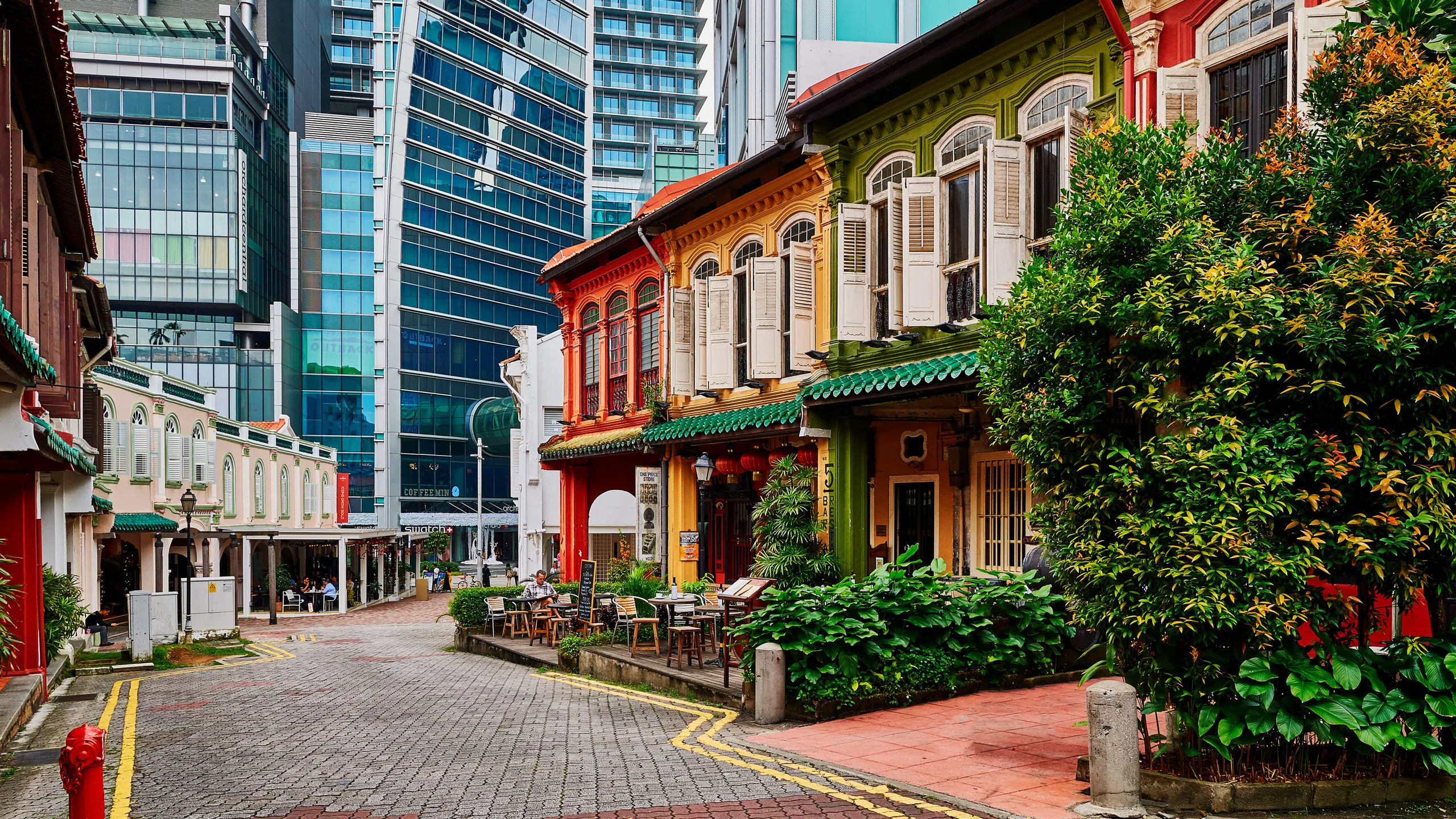
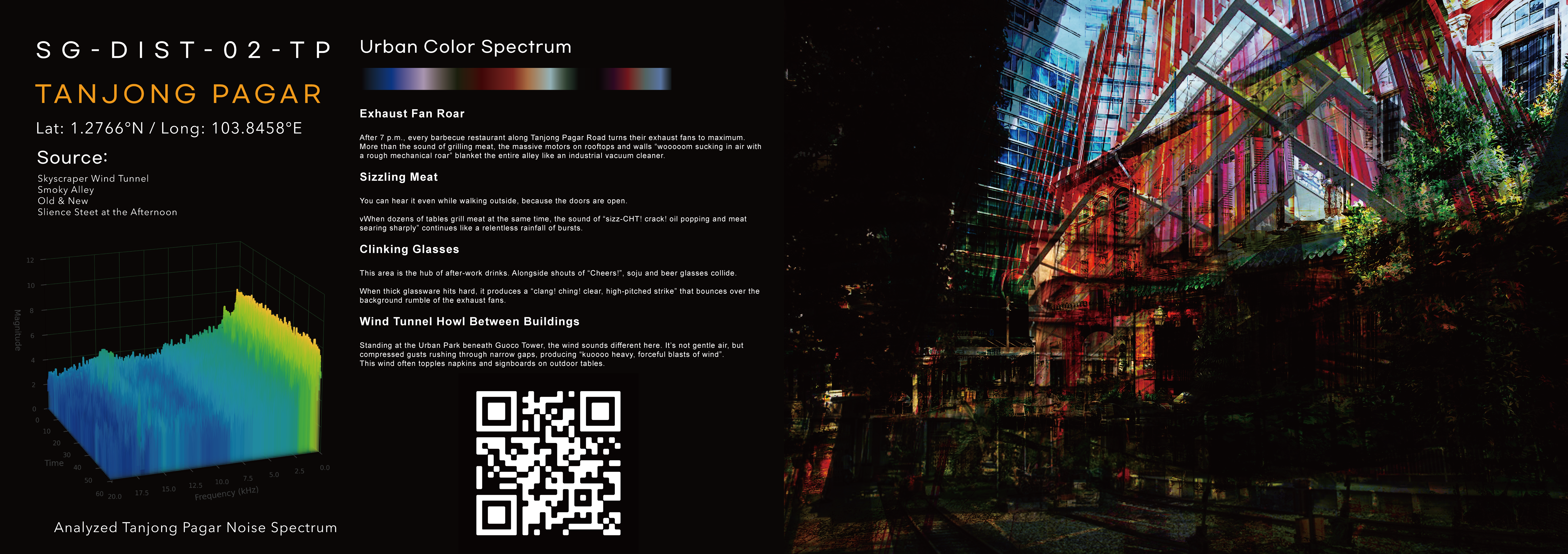
13. Tanjong Pagar
Noise Source: A coexistence of CBD office noise and the clinking of glasses/cutlery at shophouse dining spots. Nearby construction noise.
Sonic Characteristics:
Hybrid: A duality where the sound character shifts completely between day (office/quiet) and night (dining/loud).
Vertical vs Horizontal: A mix of vertical noise from skyscrapers and horizontal living noise from the ground level.
3D SOUND MAP
Interactive Singapore Noise Map
An interactive platform that transforms noise data from 13 key districts in Singapore into immersive 3D visual art. Navigate a virtual map to experience ambient sounds collected from locations such as Orchard, Chinatown, and Changi Airport, visualized through real-time audio-reactive particle systems. By integrating spatial audio with visual analysis, this experience reveals the unique sonic textures and patterns that define Singapore's urban soundscape.
Key Features
Interactive 3D Map: A navigable 3D interface covering Singapore's urban landscape.
Audio-Reactive Visuals: Generative visuals responding in real-time to sound frequency and volume.
Hidden
Site-Specific Data: Unique noise characteristics (dB, texture) from 13 distinct locations.
Immersive Experience: A combination of 360-degree panoramic views and spatial audio.
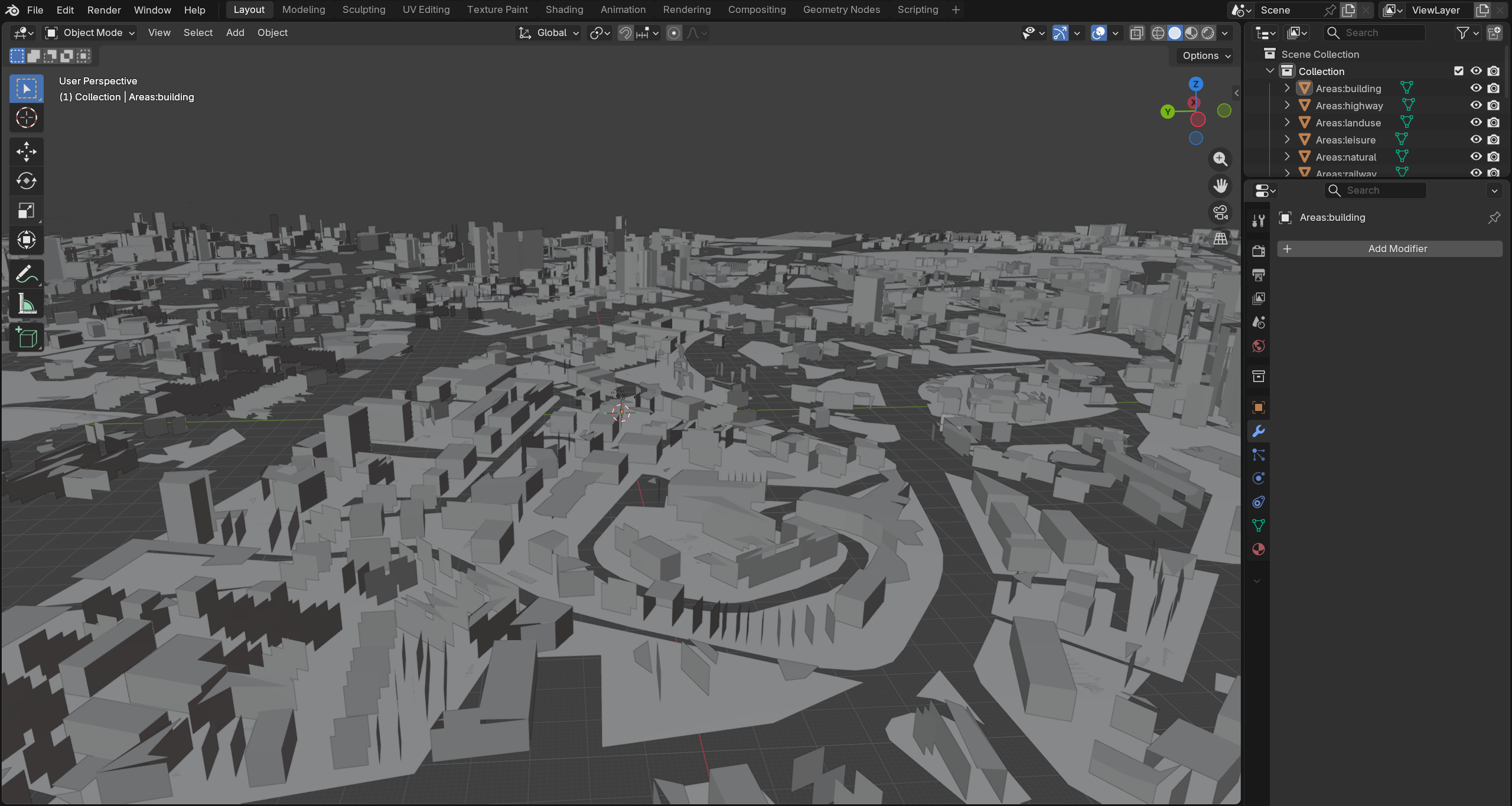
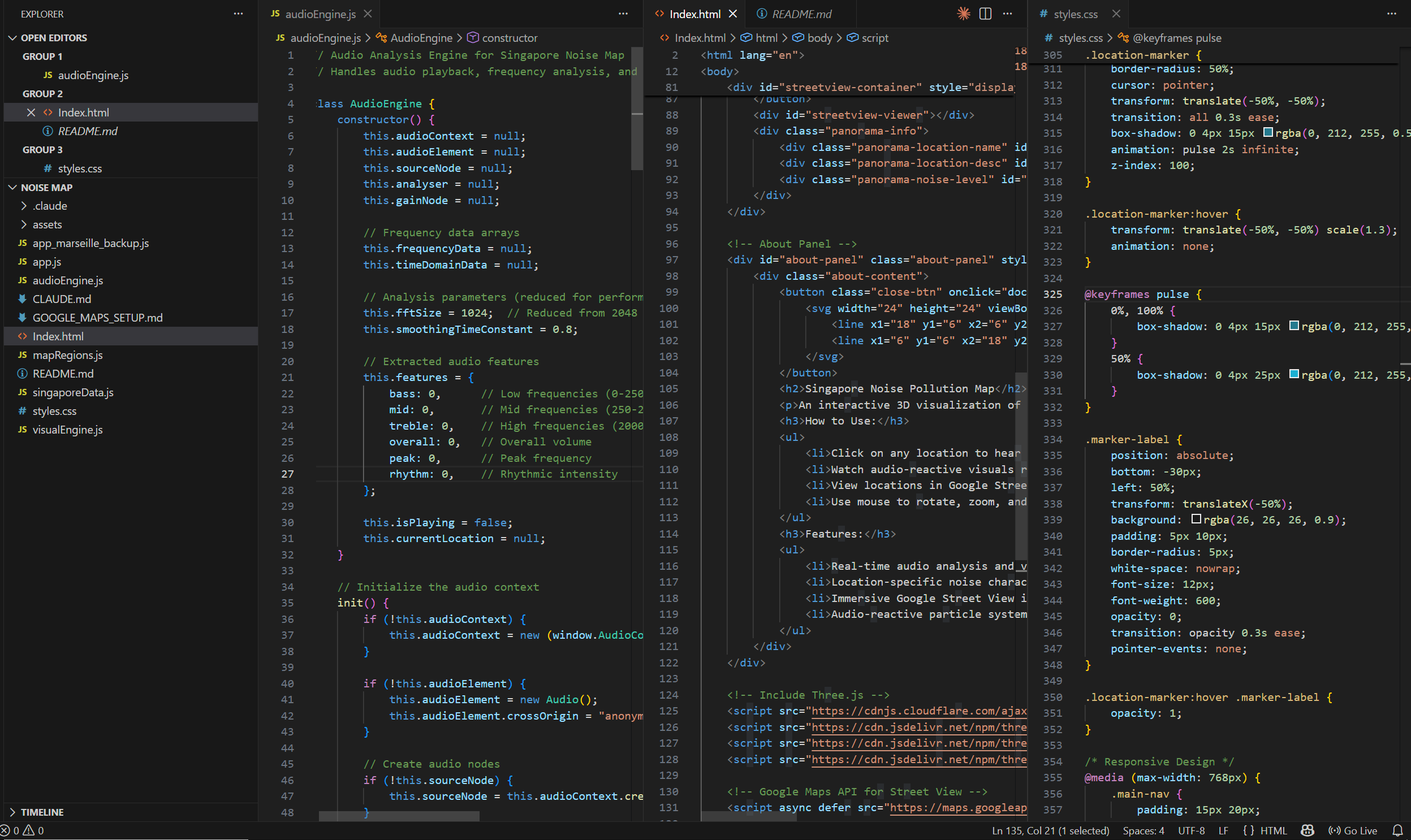
Production Process
Documentation of the technical workflow and development stages in creating the interactive 3D sound map.
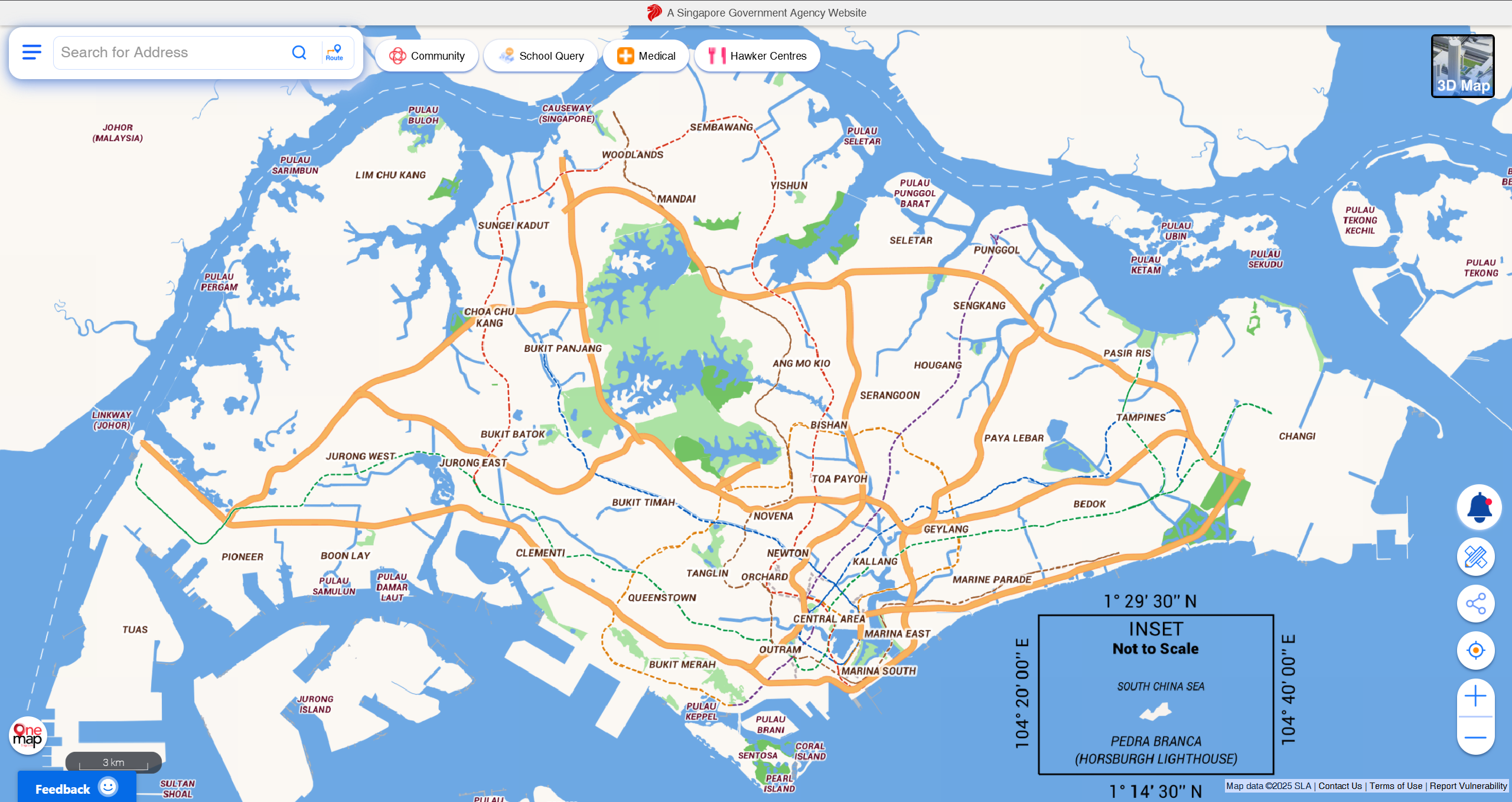
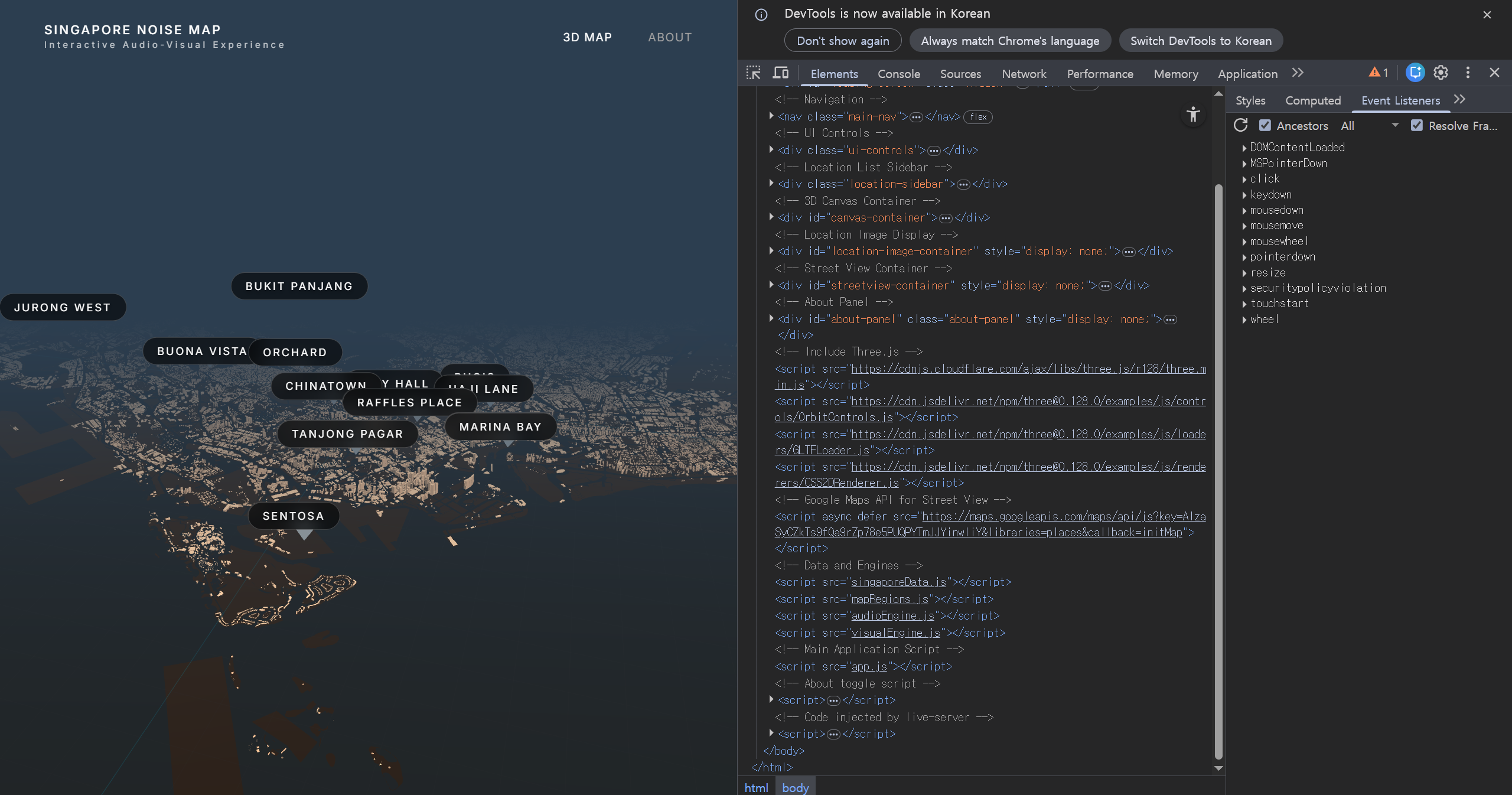
Regional Sound Samples
Experience the unique sonic identity of each location
1. Bugis
Shopping mall meets traditional market
2. Bukit Panjang
LRT and residential living
3. Buona Vista
Interchange and flowing crowds
4. Changi Airport
Jet engines and soft announcements
5. Chinatown
Hawkers and temple bells
6. City Hall
Wide roads and stone reflections
7. Haji Lane
Pub music in narrow alleys
8. Jurong West
Industrial machinery and heavy trucks
9. Marina Bay
Waves and waterfront winds
10. Orchard
Massive crowds and street busking
11. Raffles Place
HVAC systems and clicking heels
12. Sentosa
Artificial waves and resort ambience
13. Tanjong Pagar
CBD office meets dining spots
LIMITATIONS & CONSTRAINTS
My Journey and Reflections
From Ambition to Reality: Why I Embraced a Hybrid Approach
When I first started this project, my goal was simple yet ambitious: to personally visit all 13 key locations in Singapore and capture their authentic sounds with my own ears and eyes. However, once I stepped into the field, the reality was different. Confronted with barriers such as time constraints, equipment limitations, and unpredictable environmental variables, I was forced to modify my original plan. Yet, this process was not merely a compromise; it became a crucial turning point that compelled me to rethink the very question: What constitutes authentic noise?
1. The Reality of Field Recording
Stepping out with my microphone, the first realization hit hard: I cannot capture the entirety of the city's time alone.
Time & Scope: To perfectly record all 13 locations, I simply lacked the physical time. The city sounds completely different in the morning versus the night, on weekdays versus weekends. I began to question whether my brief, singular recordings could truly represent the complex identity of those districts.
Equipment Limits: My equipment had inherent limitations in capturing the roar of a massive city clearly. Especially in high traffic areas, sounds would get mashed up, making it difficult to isolate the specific details and acoustic textures I wanted to highlight.
Unpredictability: Variables like weather or sudden construction were constant issues. For instance, I went to Jurong West expecting to capture heavy industrial sounds, but due to a sudden downpour, I returned home with only the sound of rain.
2. The Limits of My Lens
I felt a similar sense of powerlessness when attempting to photographically visualize these sounds.
Access Denied: Most of the angles I needed were in restricted zones. The sources of massive noise like cooling towers, industrial plants, or construction interiors were inaccessible due to security protocols. I was always forced to document from behind fences or look up from the ground.
Limited Perspective: Eye level photography couldn't capture the city's immense scale. Urban noise is three-dimensional operating from underground subways to rooftop HVAC units but I felt my camera was only capturing a tiny fraction of that reality.
3. Finding a New Way: The Power of Archives
These limitations led me to turn my attention to Digital Archives. Initially, I hesitated, asking myself, Is it valid to use materials I didn't capture myself? However, my perspective quickly shifted.
Collective Memory: The data found on public portals and platforms like YouTube represented a Collective Memory recorded by countless people from different times and places. They held the sounds of restricted zones I couldn't enter and the landscapes of times I had missed.
A Richer Picture: When I combined the sensory experience I felt physically in the field with the high quality "data" provided by these archives, the result became much richer, clearer, and more multi dimensional.
Ultimately, I did not abandon fieldwork; I expanded my methodology. I am convinced that this Hybrid Approach blending my subjective, first-person experience with the objective, third person records of data archives is the most truthful way to map the invisible architecture of urban noise.
COMPOSITE ARTWORK
Location Photography & Synthesis
Photos captured from each location, transformed into composite artworks that blend multiple perspectives and sonic qualities into unified visual narratives. Click on any composite image to reveal the source photographs used in its creation.
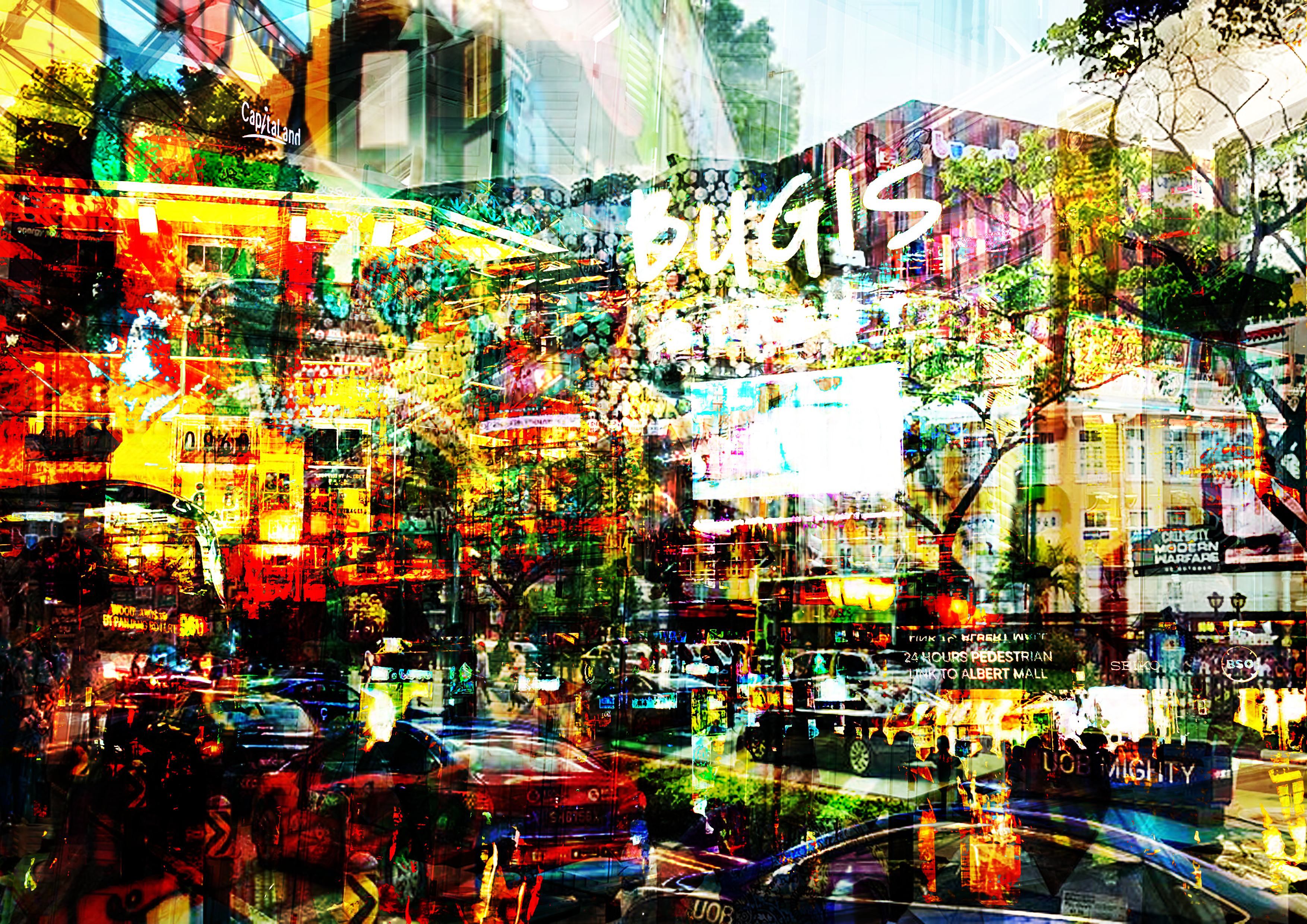
Bugis - Shopping mall meets traditional market
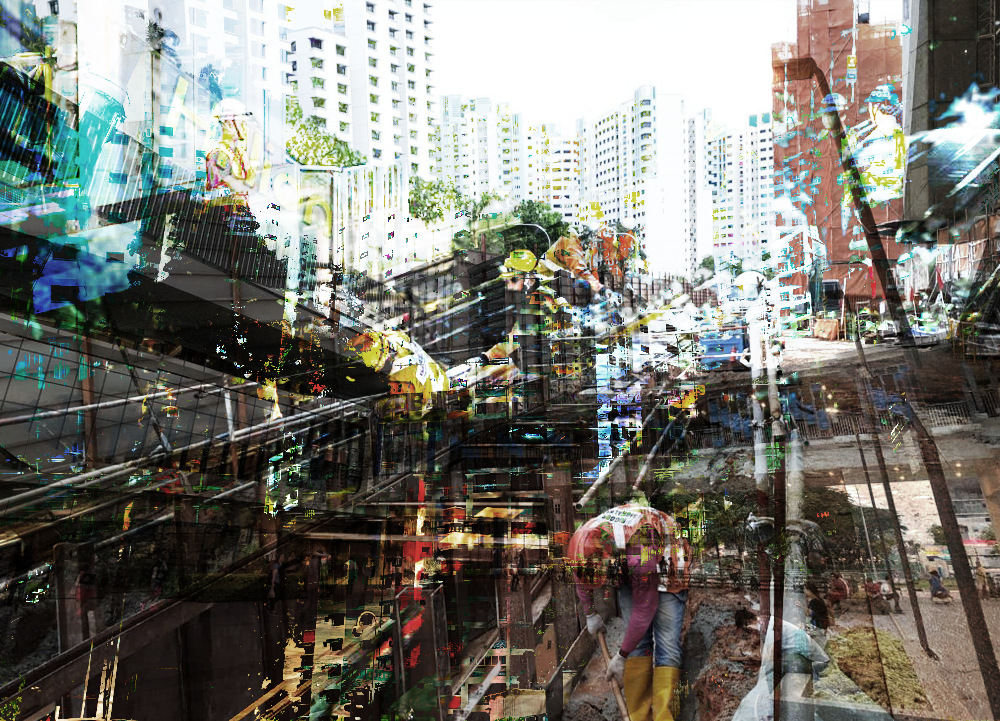
Bukit Panjang - LRT and residential living
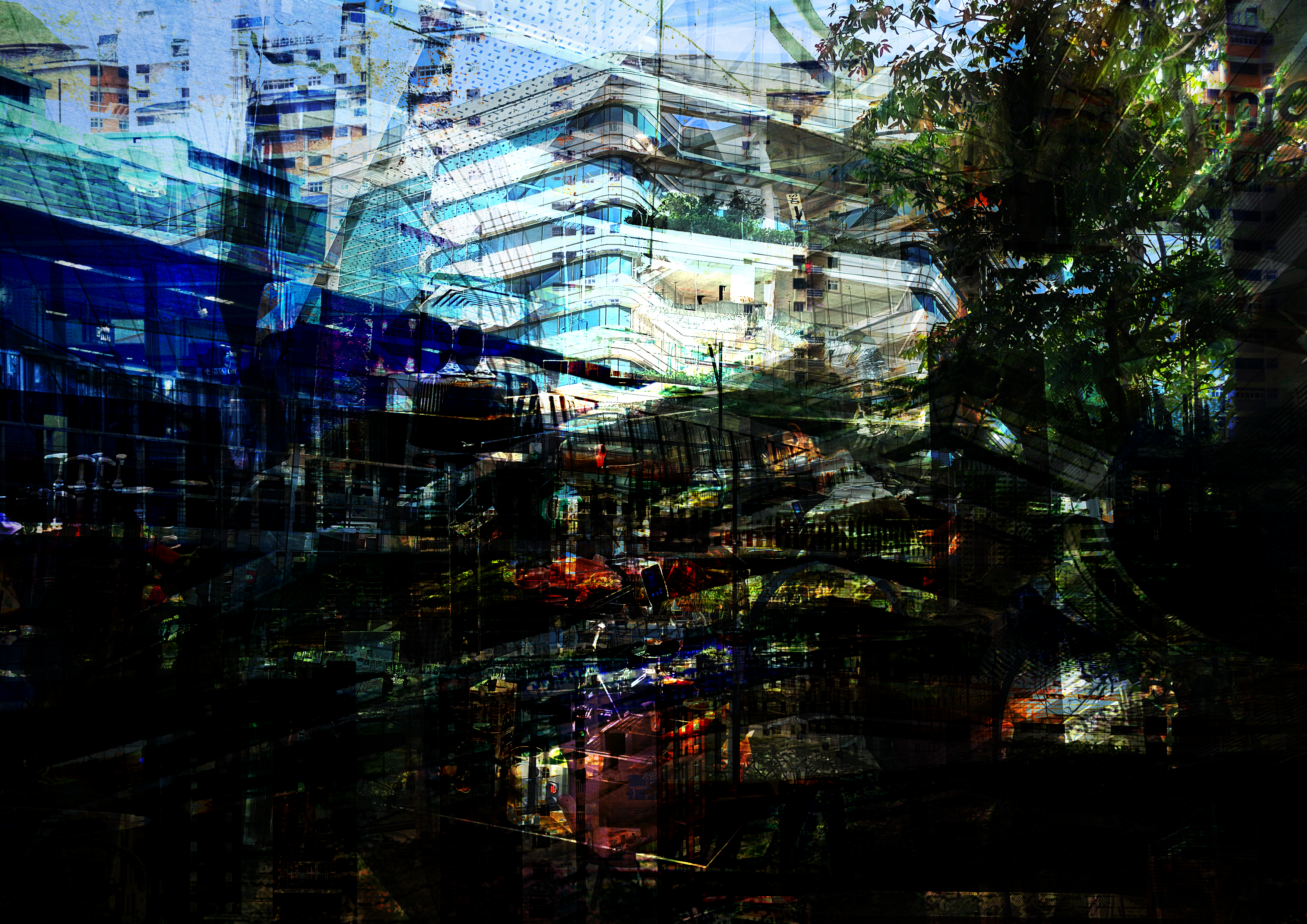
Buona Vista - Interchange and flowing crowds
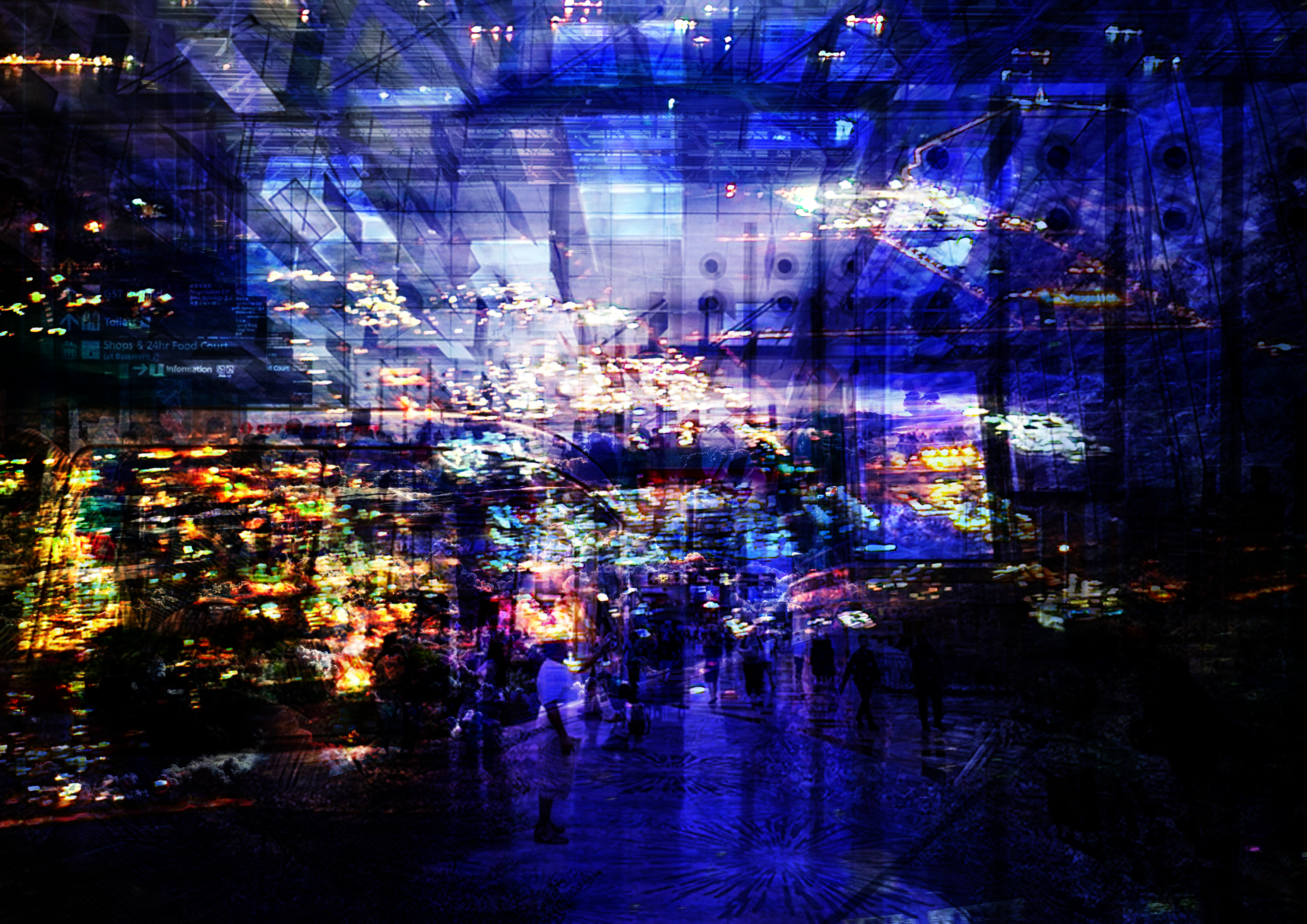
Changi Airport - Jet engines and soft announcements
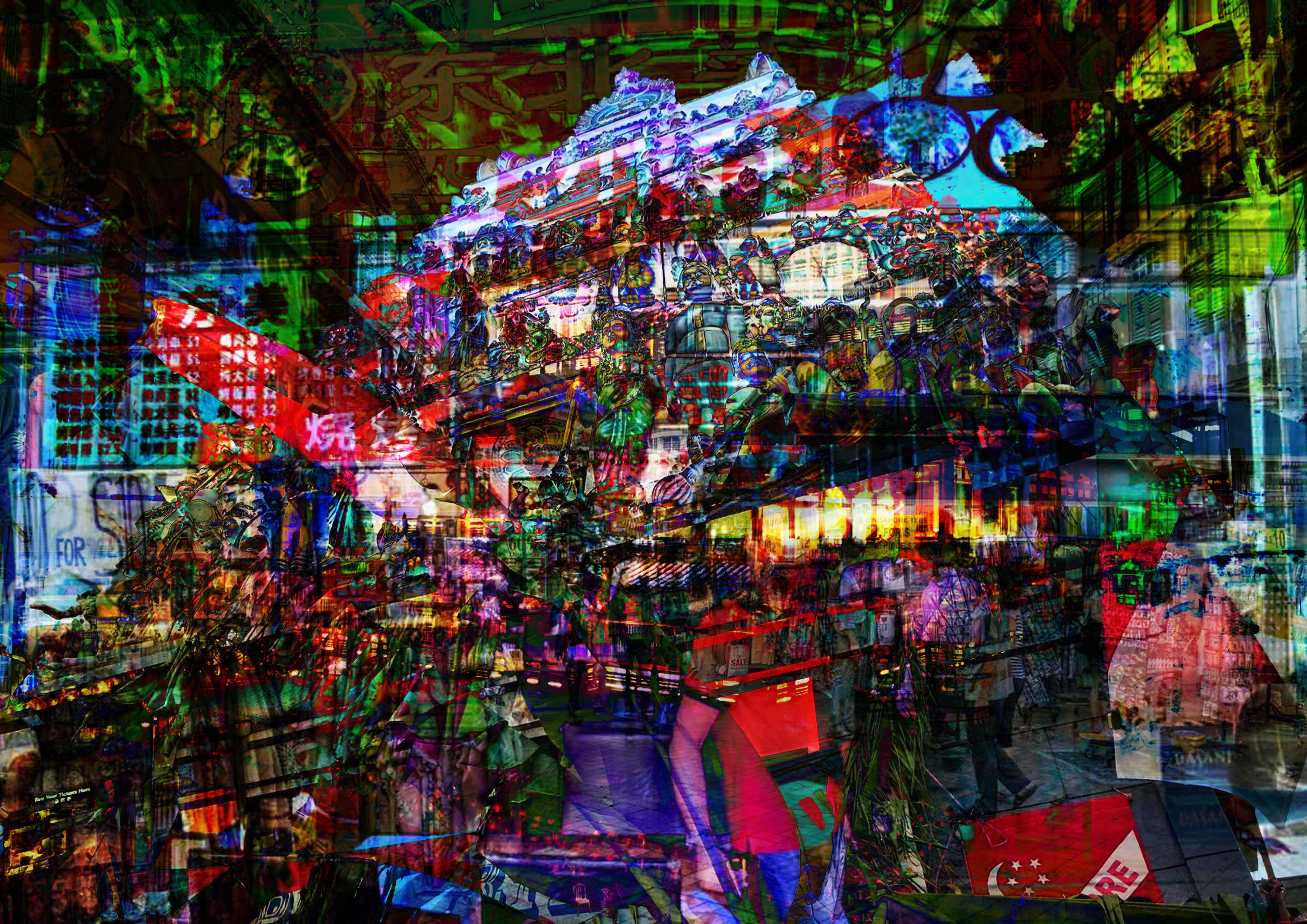
Chinatown - Hawkers and temple bells
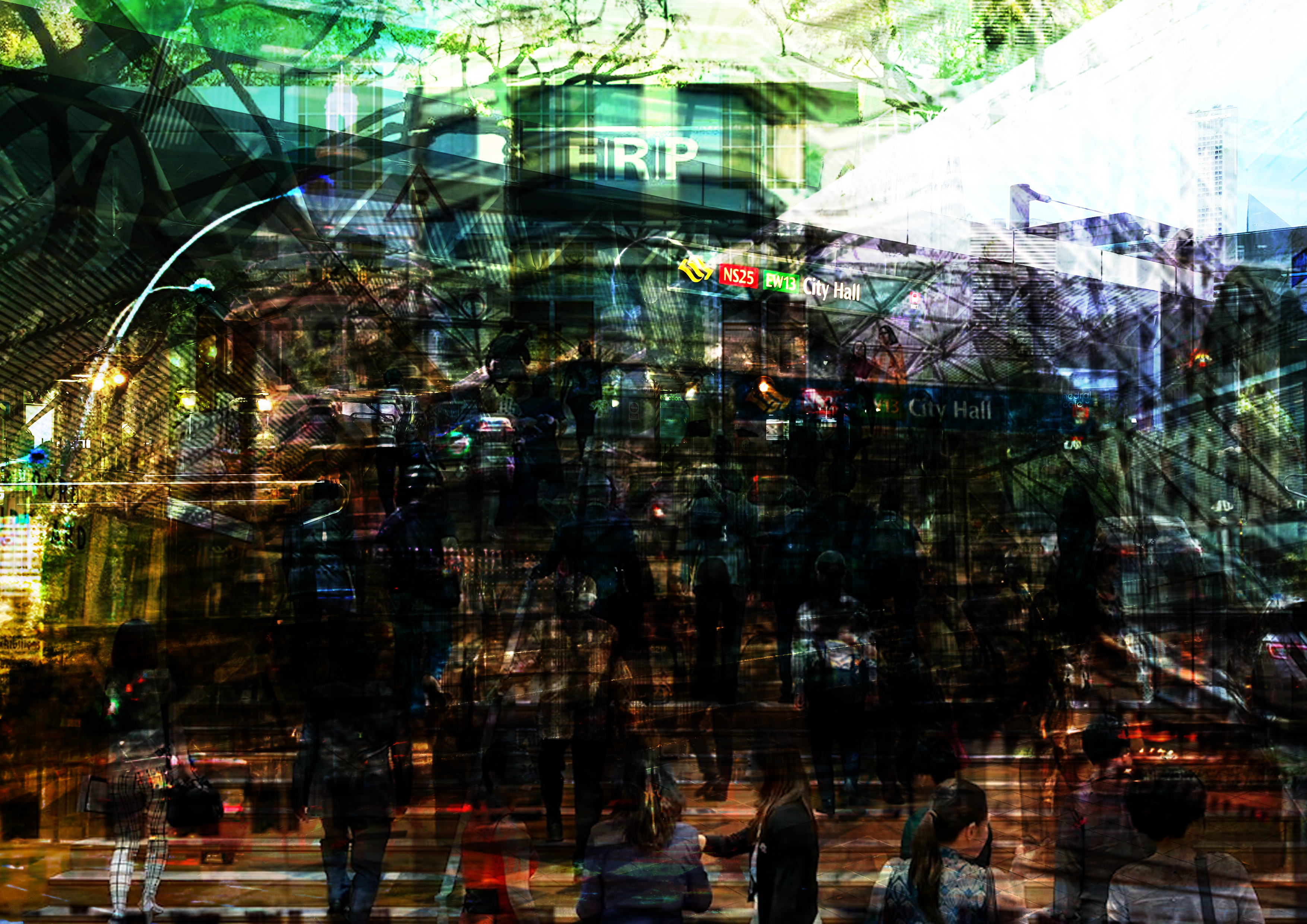
City Hall - Wide roads and stone reflections
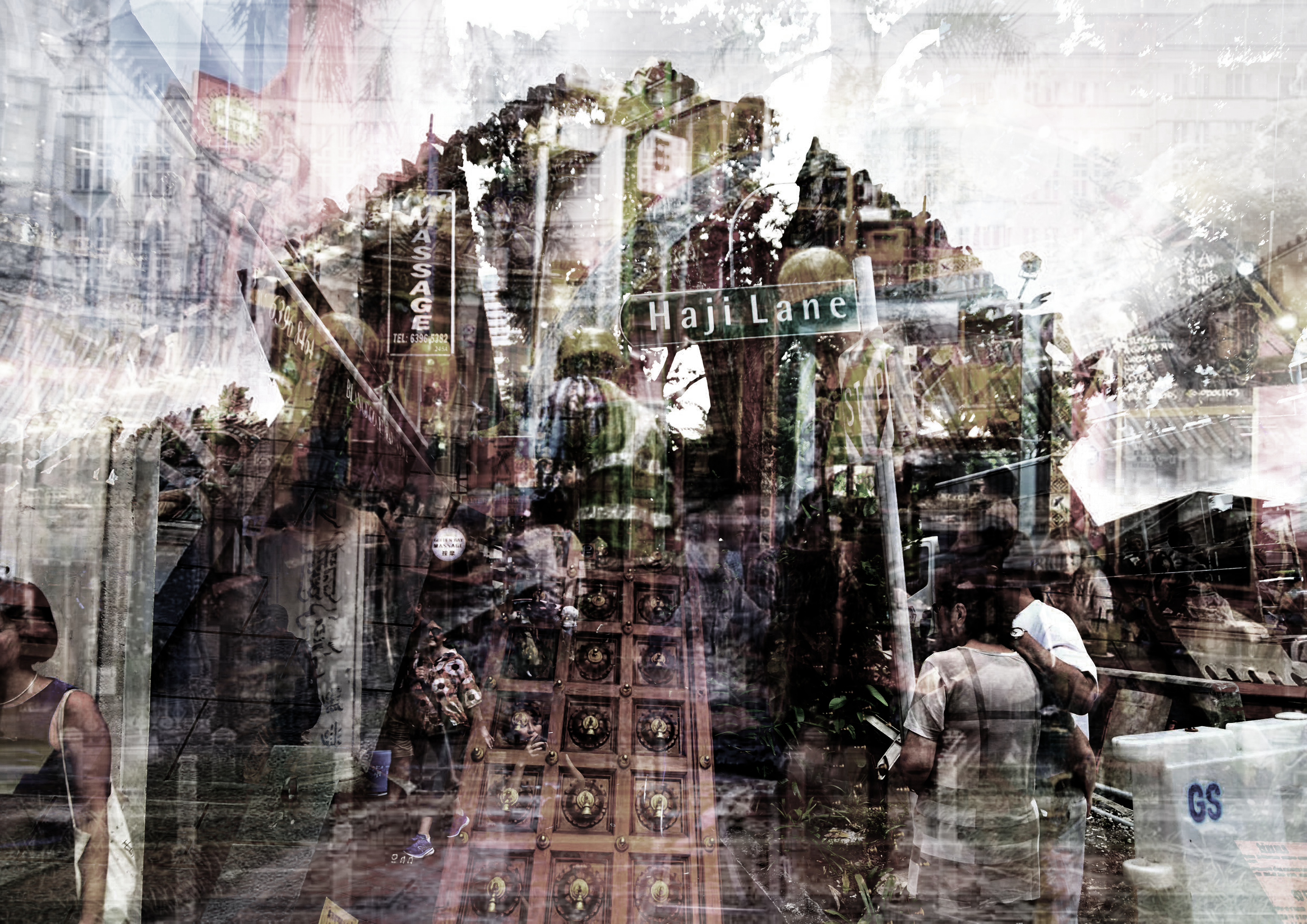
Heji Lane - Pub music in narrow alleys
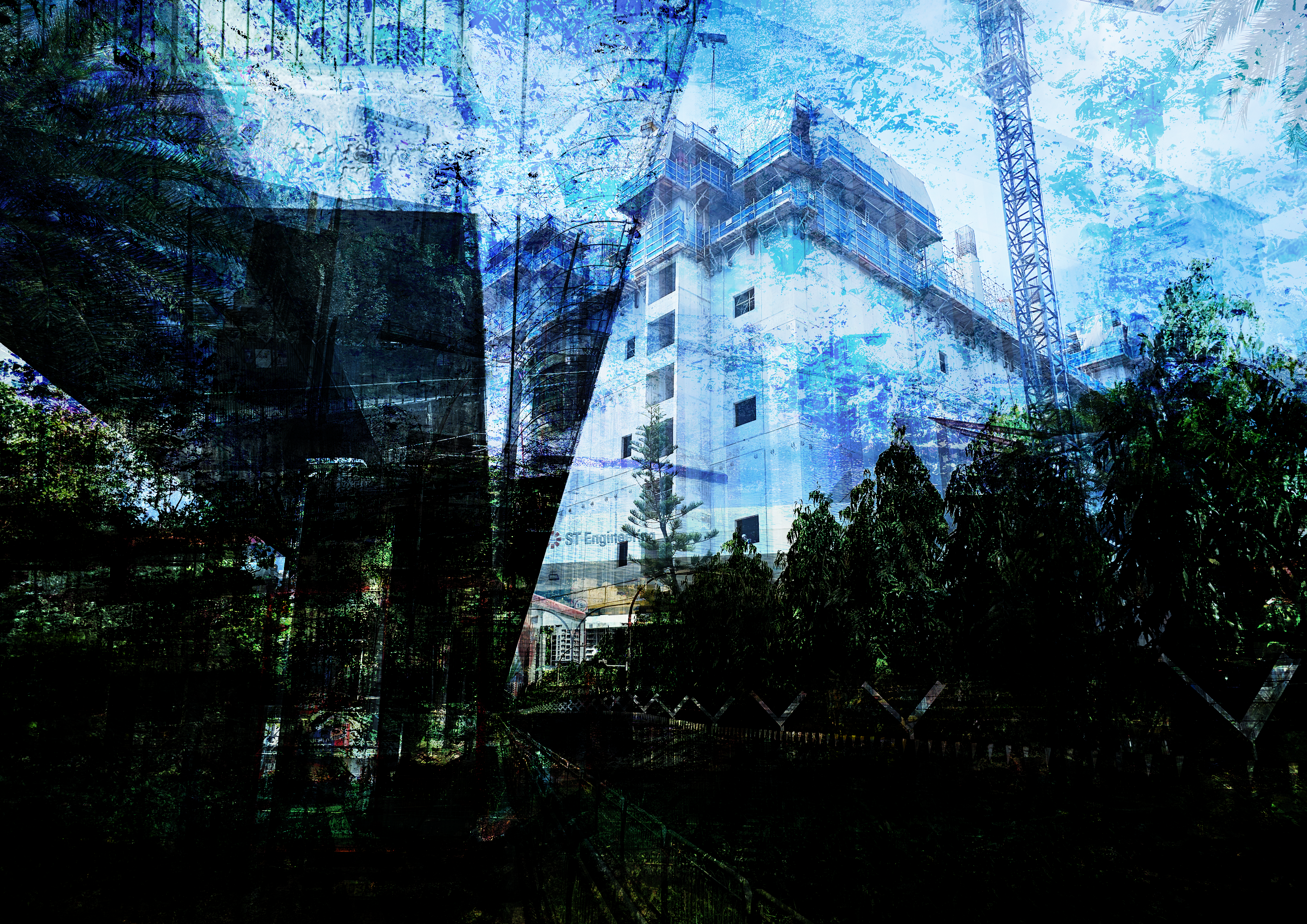
Jurong West - Industrial machinery and heavy trucks
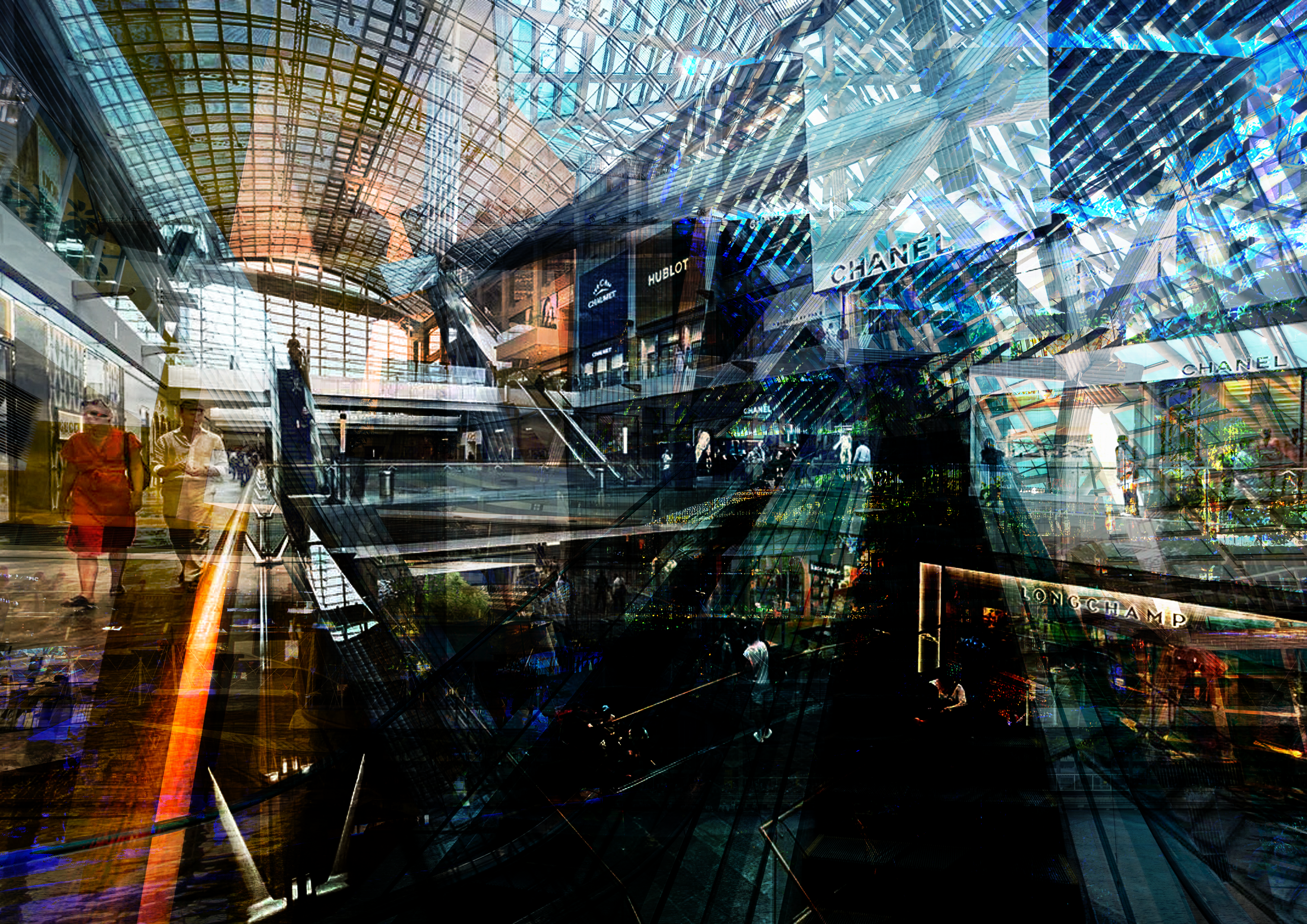
Marina Bay - Waves and waterfront winds
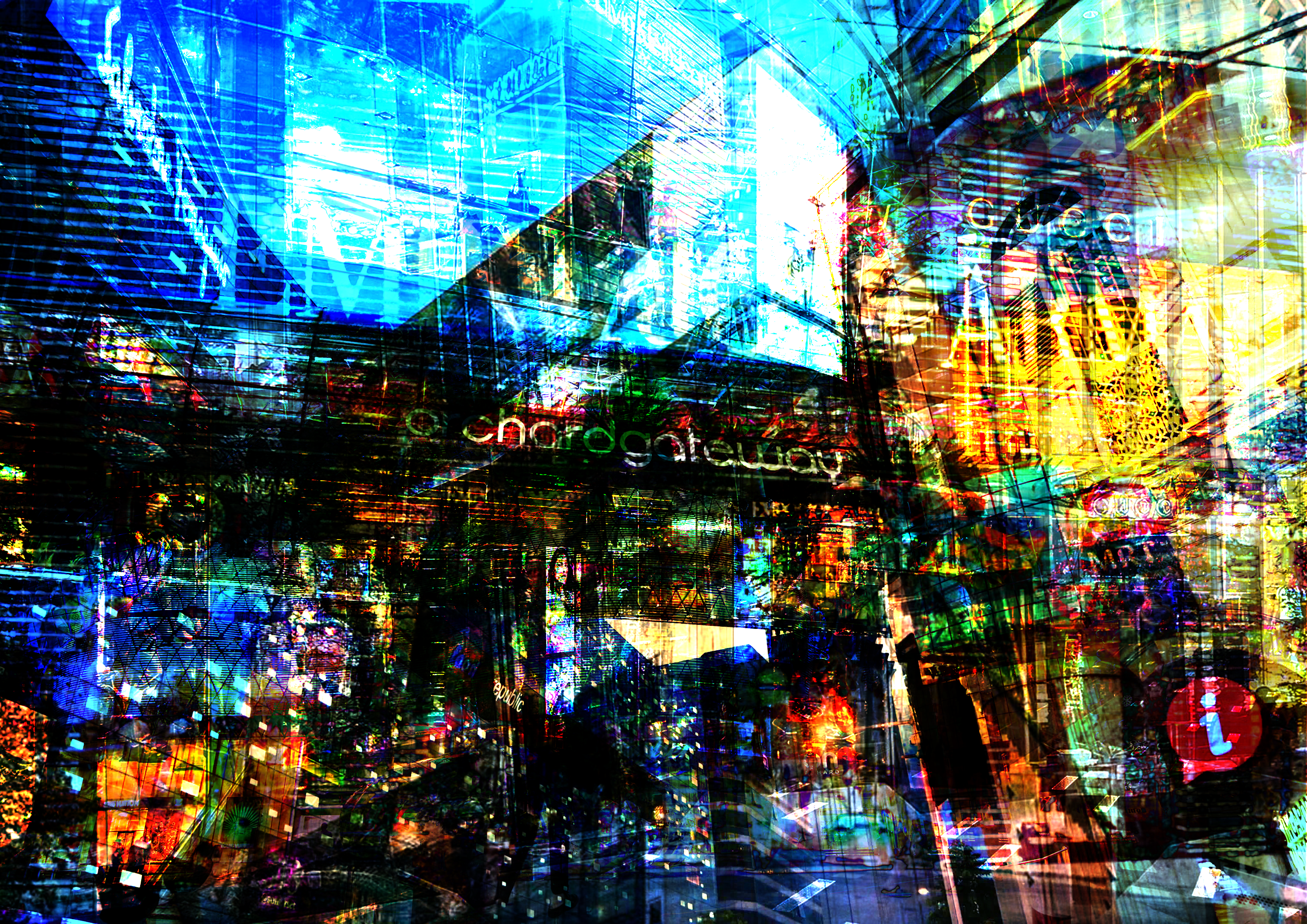
Orchard - Massive crowds and street busking
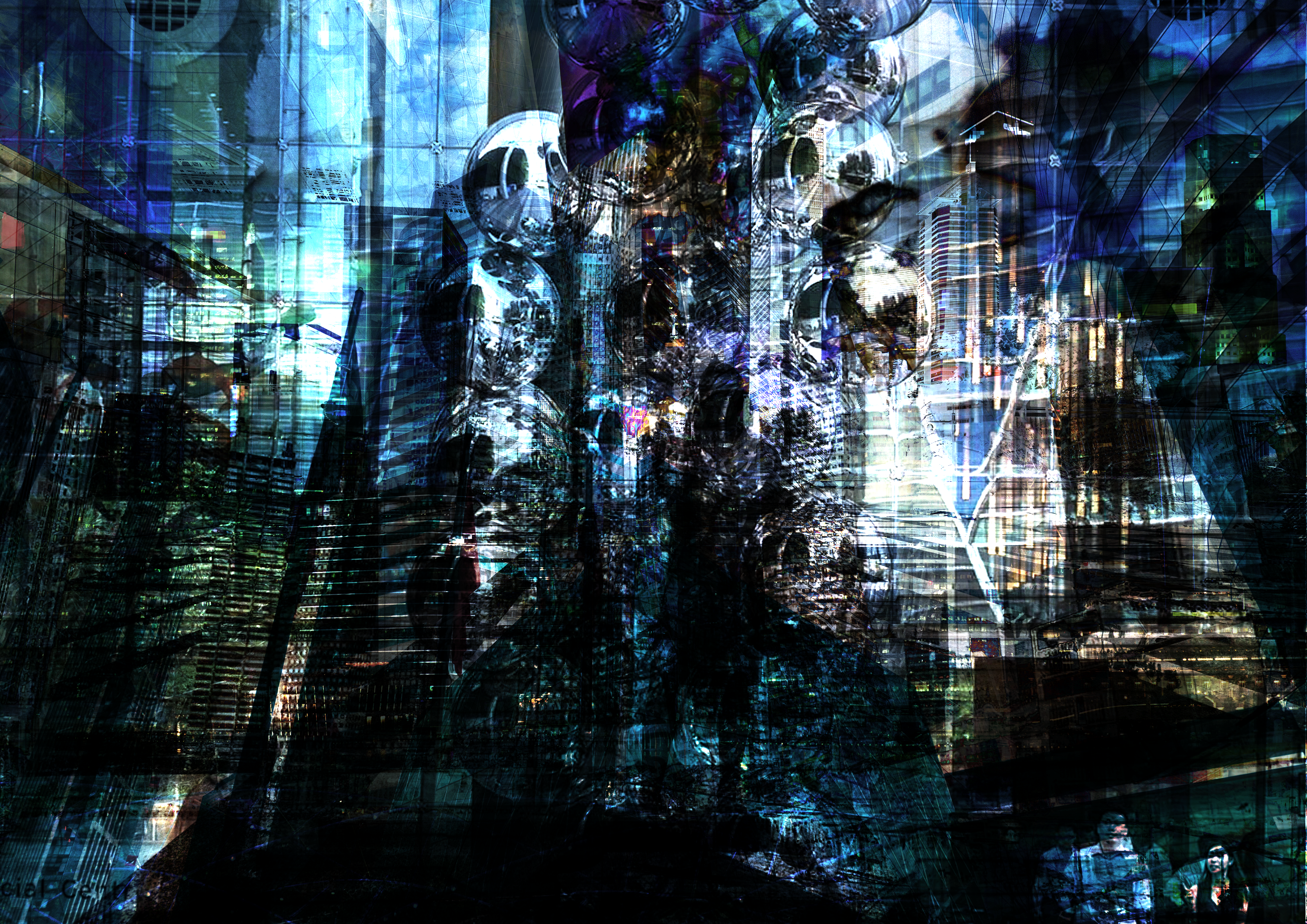
Raffles Place - HVAC systems and clicking heels
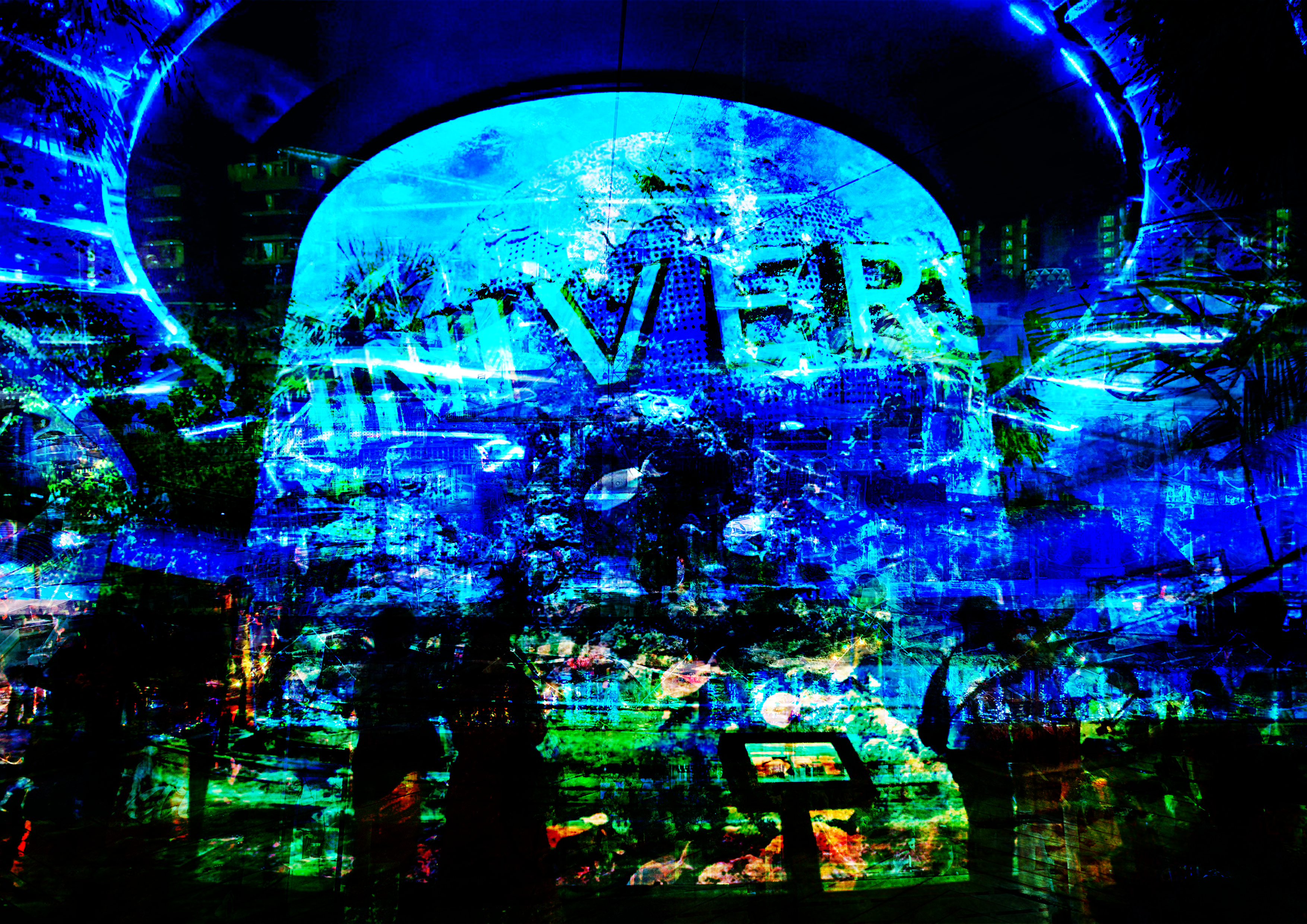
Sentosa - Artificial waves and resort ambience
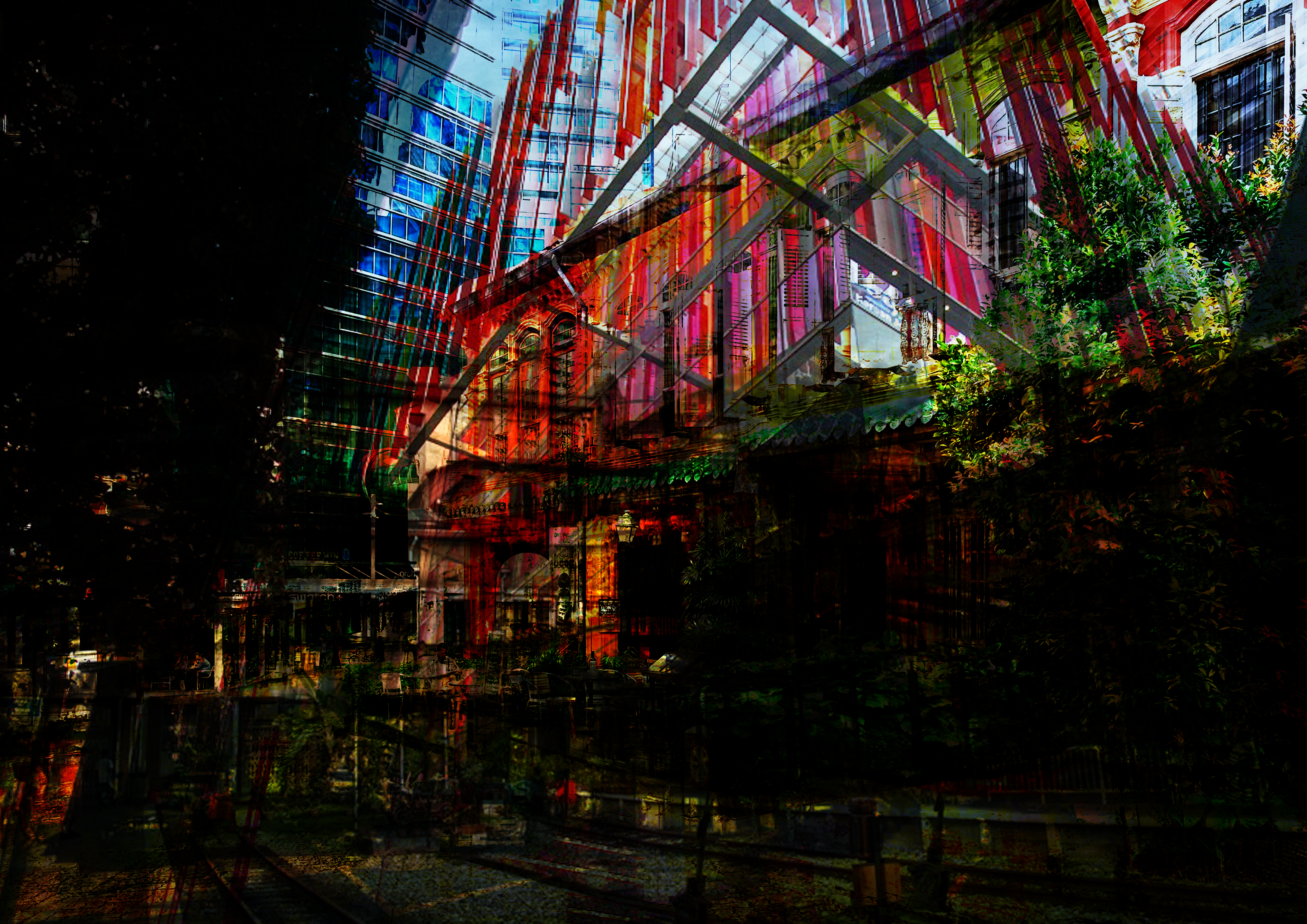
Tanjong Pagar - CBD office meets dining spots
Noise Catalog
Urban Noise Visualization
This document serves as a digital archive that translates 'Noise' from key locations in Singapore into visual and auditory data. Based on image and sound data collected through field research, it reconstructs the characteristics of invisible sound into intuitive visual artifacts.
Each page consists of the following four elements:
1. Digital Compositing (Visual Artifact / Right)
Method: Multiple photographs taken on-site were layered and synthesized using Adobe Photoshop.
Purpose: This visualizes the density and complexity of urban noise as a visual texture, capturing environmental layers that a single photograph cannot portray.
2. Frequency Analysis (Audio Spectrum / Bottom Left)
Method: Using generative AI (Claude), raw audio waveform data was converted into 3D visualizations.
Purpose: It allows for the visual verification of the physical structure of sound, indicating whether the noise is dominated by low or high-frequency ranges.
3. Urban Color Spectrum (Top Left)
Method: The dominant color values were extracted from the on-site footage and the composited artifact to create a color palette.
Purpose: This translates auditory atmosphere into color information, intuitively conveying the unique mood of the location.
4. Audio QR (Audio Access / Bottom Center)
Function: Scanning the QR code provides immediate access to the original field recordings from the location.
Experience: It offers a multimodal experience, allowing viewers to listen to the actual environment while observing the visualized artifact.
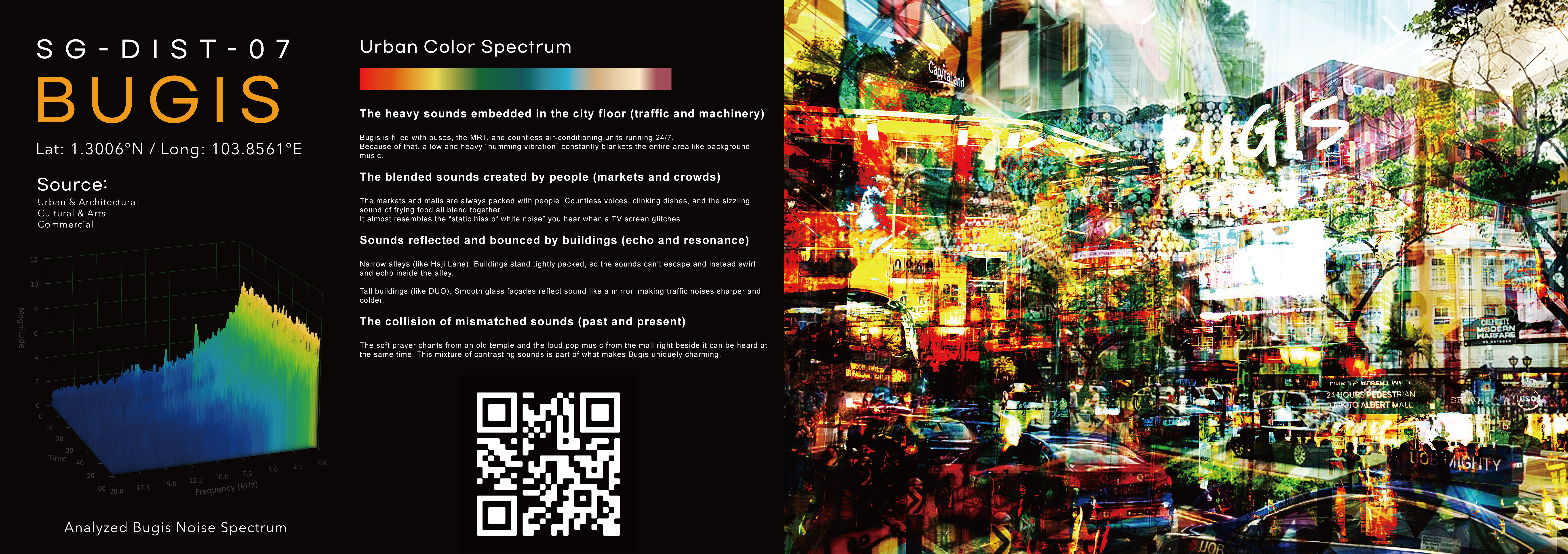
1 / 13
AUDIO REACTIVE PARTICLES
Audio-Reactive Particle Simulation
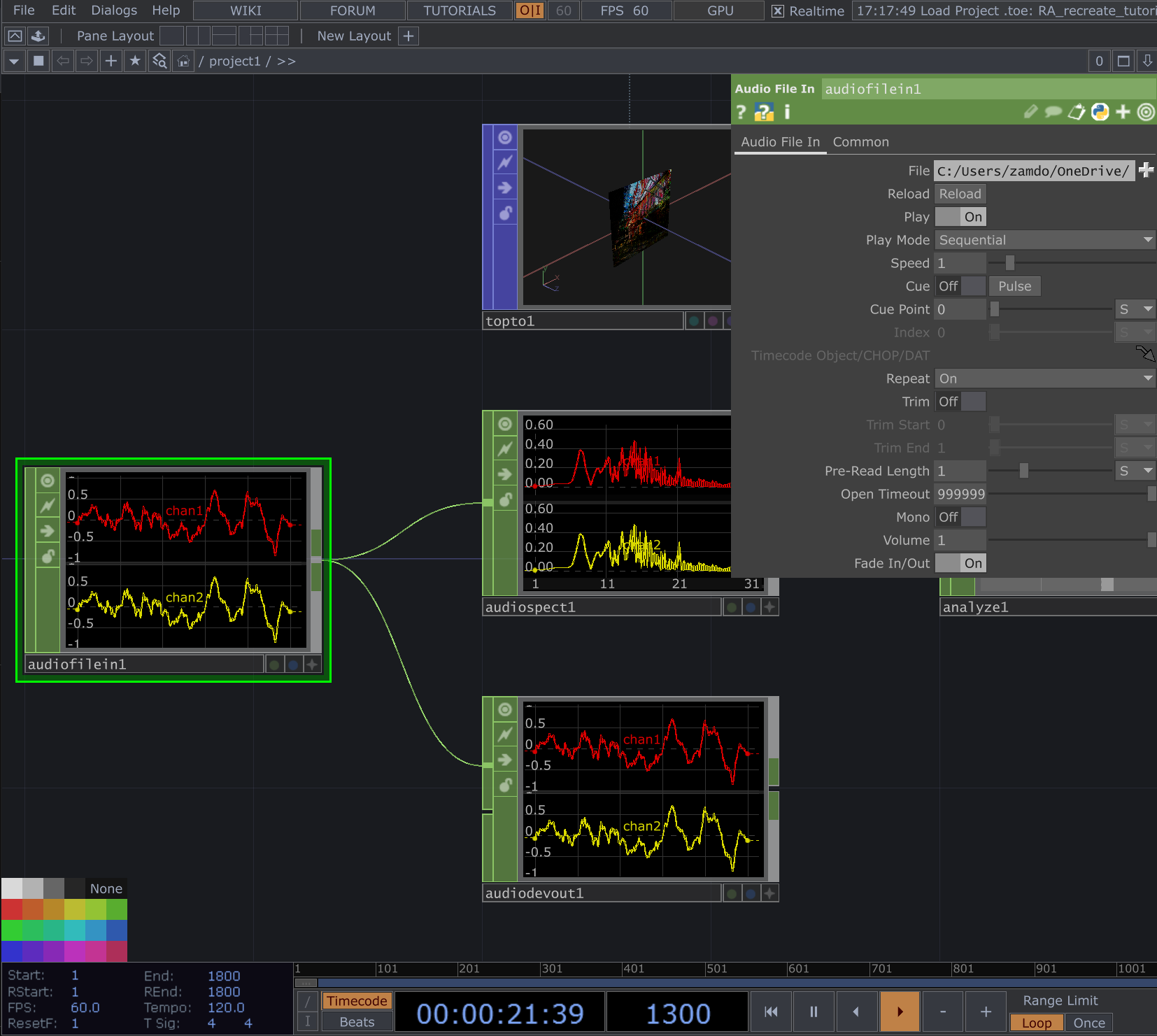
This artwork is a real-time 3D simulation created using TouchDesigner, designed to transform the static 'Digital Composite Artifacts' into a dynamic, living entity. It functions as a bridge between the visual data (image) and the auditory data (noise).
1. Data Transmutation (Image to Particle)
Process: The system utilizes the previously created digital composite images as the base texture. It samples color and luminance data from specific coordinates of the image and converts them into thousands of individual 3D particles.
Result: The static image is deconstructed into a "point cloud," retaining the original color palette and form but adding spatial depth and volume.
2. Audio-Driven Kinetics (Sound as Energy)
Process: The simulation is powered by the frequency spectrum of the field recordings. The audio data is analyzed in real-time, mapping specific frequency bands (Low/Mid/High) to the physical attributes of the particles, such as scale, displacement, and turbulence.
Result: The particles do not move randomly; they "dance" to the noise. Loud machinery sounds might cause sharp, explosive expansions, while ambient wind creates gentle, fluid undulations.
3. Volumetric Abstraction
Visual Language: While the artwork is abstract, it possesses a three-dimensional (volumetric) structure. The noise is no longer just heard; it is seen as a physical force that pushes and pulls the particles, creating a fluid, breathing sculpture of the urban soundscape.
Bugis - Shopping mall meets traditional market
Bukit Panjang - LRT and residential living
Buona Vista - Interchange and flowing crowds
Changi Airport - Jet engines and soft announcements
Chinatown - Hawkers and temple bells
City Hall - Wide roads and stone reflections
Heji Lane - Pub music in narrow alleys
Jurong West - Industrial machinery and heavy trucks
Marina Bay - Waves and waterfront winds
Orchard - Massive crowds and street busking
Raffles Place - HVAC systems and clicking heels
Sentosa - Artificial waves and resort ambience
Tanjong Pagar - CBD office meets dining spots
Detail Cuts
제작 과정 및 디테일 영상